
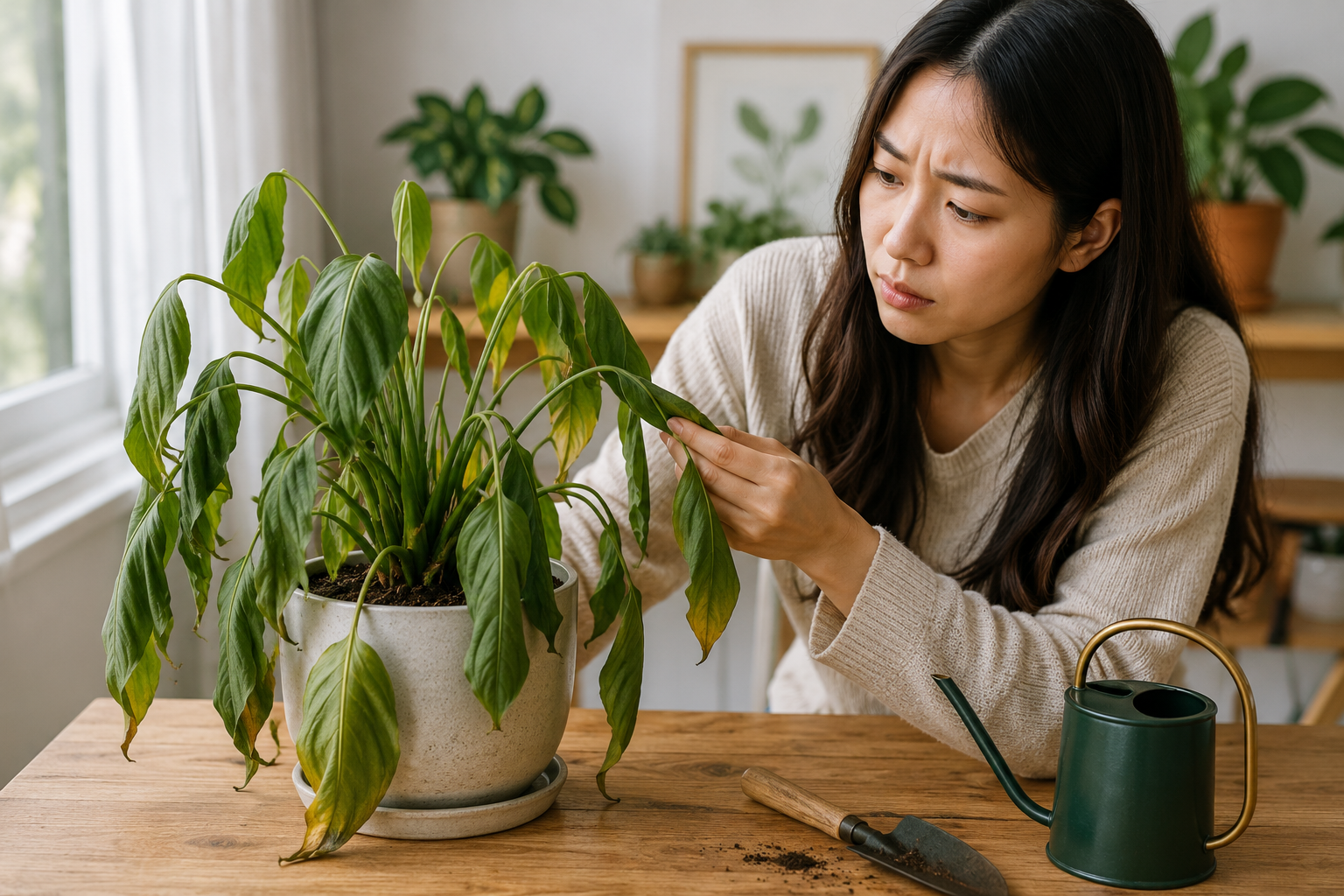
If you notice your indoor plant drooping, it’s often a sign that something isn’t quite right with its care. Drooping can happen for several common reasons, including incorrect watering—either too much or too little—insufficient light, environmental stress, or pest problems. Seeing a plant wilt can feel discouraging, but careful observation can help narrow down the cause. A few targeted adjustments can often help, although recovery time depends on the cause and the plant’s condition.
Table of Contents
- Common Causes of Indoor Plant Drooping
- Watering Issues and Soil Problems
- Light and Environmental Factors
- Pests and Diseases
- How to Revive a Drooping Indoor Plant
- Checking and Correcting Water Levels
- Improving Light and Placement
- Treating Pests and Disease
- Preventing Future Drooping
- Build a Plant-Specific Care Routine
- Frequently Asked Questions
- How can I tell if my indoor plant is drooping due to overwatering or underwatering?
- What is the best way to fix a drooping plant that isn’t getting enough light?
- Can pests cause indoor plants to droop, and how should I address this?
Common Causes of Indoor Plant Drooping
Indoor plants can droop for several reasons, often signaling some type of stress or imbalance in their environment. Understanding the common causes can help you quickly identify and address the issue to keep your plants thriving.
Watering Issues and Soil Problems
One of the most frequent reasons for drooping is related to watering and soil conditions. Both overwatering and underwatering can cause leaves and stems to wilt as roots struggle to maintain the right moisture balance. Overwatering can contribute to root damage because saturated soil limits oxygen around the roots. Underwatering causes dehydration and can reduce the plant’s ability to move water and nutrients effectively. Check the soil before watering, but remember that moisture needs vary by plant: some prefer the mix to dry substantially, while others need more consistent moisture. Use a well-draining mix and a pot with drainage holes so excess water can escape. For more detailed guidance, see How Often Should You Water Indoor Plants? A Beginner’s Guide.
Light and Environmental Factors
Light plays a key role in plant health. Too little light can weaken plants, causing them to stretch, lean, and droop as they reach for a better source. Conversely, excessively strong direct sunlight can scorch leaves, leading to sagging or browning. It’s important to place your plants in spots that meet their specific light needs, which vary by species. Additionally, environmental factors like temperature fluctuations, drafts, and low humidity can stress indoor plants, causing leaves and stems to droop. Maintaining a stable indoor climate and avoiding sudden changes will help plants stay firm and upright. For a comprehensive overview of indoor plant environments and care basics, you might find the Indoor Plant Care Guide for Beginners: Everything You Need to Know useful.
Pests and Diseases
Pests and diseases are less obvious but still common reasons for drooping. Insects like spider mites, aphids, or mealybugs can weaken plants by feeding on their juices, leading to wilted and droopy foliage. Similarly, fungal or bacterial infections can compromise root and leaf health, causing droopiness and discoloration. Regularly inspect your plants for signs of pests such as webbing, sticky residue, or small insects. Also, look out for spots, mold, or unusual leaf drop that might indicate disease. Early identification and treatment are important to prevent further damage and restore plant vigor.
How to Revive a Drooping Indoor Plant
Once you notice drooping, inspect the plant and its growing conditions before changing several parts of its care at once. A few targeted adjustments can often help, although recovery time depends on the cause and the plant’s condition.
Checking and Correcting Water Levels
Improper watering—either too much or too little—is one of the most common causes of drooping. Start by checking the potting mix at a depth appropriate for the plant rather than relying on the surface alone or following a fixed calendar. If the mix has dried to the level that species normally prefers, water thoroughly and let excess water drain. If it remains soggy or waterlogged, pause before watering again and inspect the drainage, pot size, and roots. Repot only when there is a clear problem such as damaged roots, compacted mix, or a container that cannot drain properly.
Improving Light and Placement
Light plays a crucial role in your plant’s well-being. Plants indoors may droop if they aren’t getting the right amount or intensity of light. Observe the current placement of your plant and adjust if necessary. Move it closer to a window that receives indirect sunlight or provide artificial grow lights suitable for indoor plants. Avoid direct harsh sun that can scorch leaves but ensure adequate light levels so the plant can photosynthesize effectively. Also, check for drafts or temperature extremes near windows or vents, as abrupt environmental changes can stress plants and contribute to drooping.
Treating Pests and Disease
Sometimes drooping results from pests or disease weakening the plant. Inspect the stems, leaf joints, and both sides of the leaves for insects, webbing, sticky residue, discoloration, or unusual spots. Isolate the plant if a contagious pest or disease is suspected, then identify the likely problem before choosing a treatment. When properly labeled insecticidal soap is appropriate for the identified pest and plant, follow the product label carefully. Disease symptoms can have several causes, so avoid treating or removing leaves automatically; first review watering, airflow, root condition, and the pattern of damage. Seek plant-specific guidance when the cause remains unclear.
Preventing Future Drooping
Drooping can be frustrating, but a routine based on observation makes recurring problems easier to prevent. Match care to the plant rather than applying one schedule to every pot.
Build a Plant-Specific Care Routine
To prevent drooping, check soil moisture according to the plant’s needs and avoid leaving roots waterlogged. Some plants should dry considerably between waterings, while others prefer more consistent moisture. Provide the light level recommended for the species and adjust placement gradually if you notice stretching, leaning, or leaf scorch. Avoid sudden temperature changes and drafts. If very dry indoor air affects a humidity-sensitive plant, a room humidifier is generally the most effective way to raise room humidity. Regularly inspect leaves and stems for pests, keep foliage reasonably clean, and rotate the pot when needed for balanced growth.
Frequently Asked Questions
How can I tell if my indoor plant is drooping due to overwatering or underwatering?
Overwatering often causes leaves to appear yellow and feel soft, while underwatering usually results in dry, crispy leaves and soil that feels dry. Checking soil moisture and leaf texture helps determine the cause.
What is the best way to fix a drooping plant that isn’t getting enough light?
Move the plant to a location with bright, indirect sunlight. Avoid direct harsh sunlight that can scorch leaves. Adjusting placement can help restore vigor and reduce drooping.
Can pests cause indoor plants to droop, and how should I address this?
Yes. Pests such as spider mites or aphids can stress a plant and contribute to drooping. Identify the pest before treatment, isolate the plant when spread is possible, and use a properly labeled insecticidal soap only when appropriate, following the product label.