
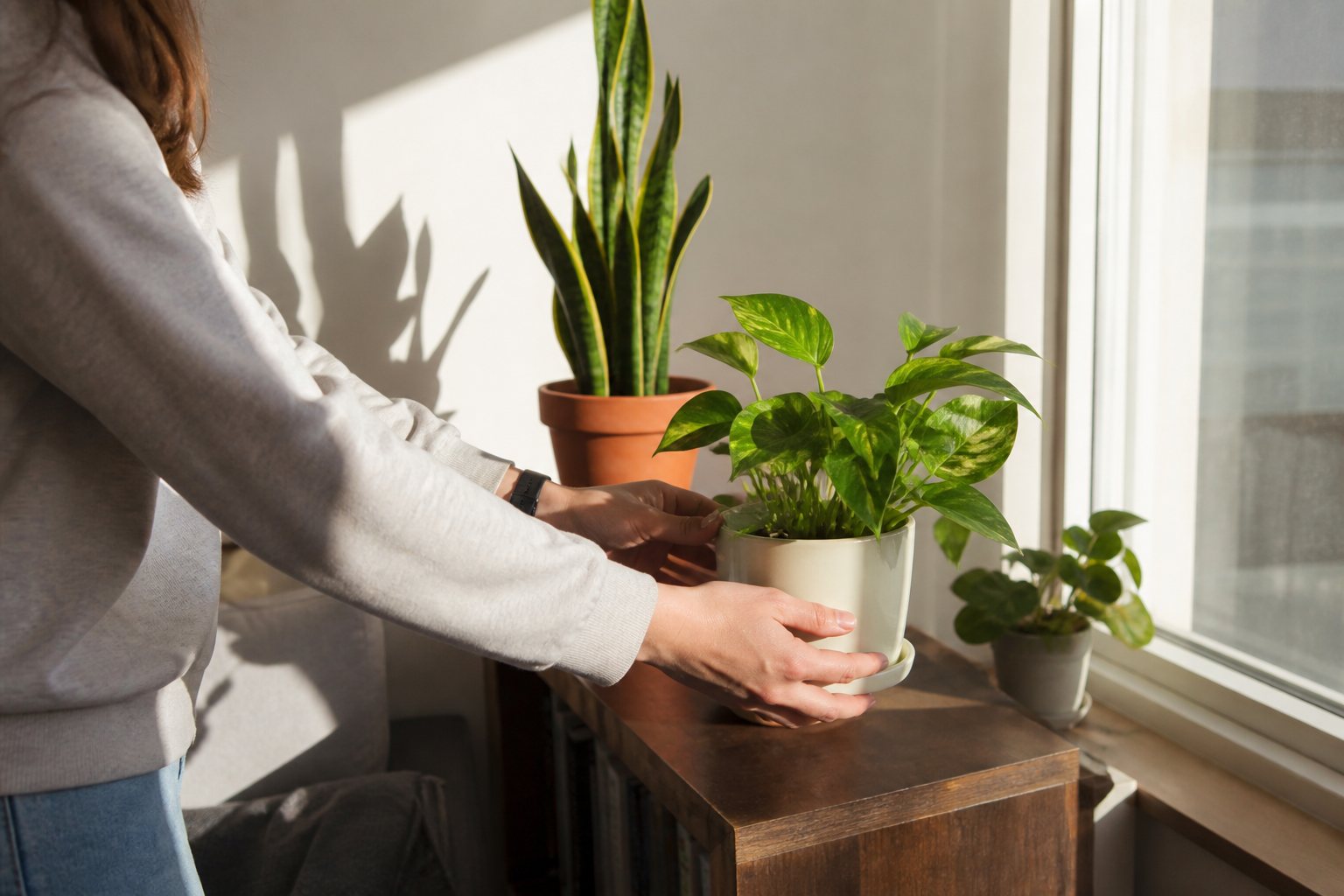
Light is one of the most important parts of indoor plant care, but plant labels do not always make it easy to understand. Terms such as “bright indirect light,” “medium light,” and “low light” can sound vague when you are trying to decide where to place a plant at home.
The good news is that you do not need expensive equipment to begin. By observing shadows, noticing how bright a room is during the day, and watching new growth, you can learn whether a plant is receiving too much, too little, or roughly the right amount of light.
Why Light Matters for Indoor Plants
Plants use light to make energy through photosynthesis. Without enough light, a plant may stay alive for a while but grow slowly, become thin, or lose its natural color.
Light also affects watering. A plant in bright light may use water faster than the same plant in a darker room. This is why a plant’s light conditions should be considered before following a watering routine. For more help with the basics, see our Indoor Plant Care Guide for Beginners.
The goal is not always to give a plant the brightest possible light. Different plants have different preferences. The right location provides enough light for steady growth without causing scorched leaves, excessive heat, or stress.
Understanding Common Indoor Light Terms
Bright indirect light
Bright indirect light is strong daylight that reaches a plant without harsh sun shining directly on its leaves for long periods.
A plant placed a few feet from a bright window may receive bright indirect light. A sheer curtain can also soften direct rays while keeping the room bright.
Many popular houseplants prefer this type of light, including pothos, monstera, rubber plants, peace lilies, and heartleaf philodendrons. However, the exact distance and amount of light still depend on the window, season, and room.
Direct sunlight
Direct sunlight means the sun’s rays fall directly on the leaves. This is strongest near an unobstructed window, especially during the middle of the day.
Some plants, such as many cacti, succulents, herbs, and citrus trees, can enjoy several hours of direct sun. Other plants may develop pale, crispy, or scorched leaves if moved suddenly into strong sunlight.
Direct sunlight is not automatically bad. It simply needs to match the plant and be introduced gradually when conditions change.
Medium light
Medium light is enough daylight for a room to feel clearly bright, but the plant is not receiving strong sun for most of the day.
A plant may receive medium light several feet away from an east- or west-facing window, or near a bright window filtered by curtains or nearby buildings. Some adaptable plants can grow well in medium light, although their growth may be slower than it would be in brighter conditions.
Low light
Low light means the plant receives limited natural light, but it does not mean darkness or no light.
A low-light area might be several feet from a small north-facing window, or in a room that receives only a little indirect daylight. It may be suitable for plants that tolerate lower light, such as snake plants, ZZ plants, cast-iron plants, and some pothos varieties.
Even low-light plants need some usable light to survive. A windowless corner is not a true low-light environment. It is a no-light environment, unless you add a grow light.
Window Direction and Indoor Plant Light
The direction a window faces affects the type and strength of light it provides. Local weather, nearby buildings, trees, curtains, and the season can change the result, but these general patterns are useful.
North-facing windows
In the Northern Hemisphere, north-facing windows usually provide gentle, indirect light. They may work well for plants that tolerate low to medium light. In the Southern Hemisphere, the pattern is reversed, so the brightest windows may face north instead.
East-facing windows
East-facing windows receive softer morning sunlight. They can be a good choice for plants that enjoy bright light without intense afternoon heat. Plants placed close to an east-facing window may receive some direct sun, while those a little farther away may receive bright indirect light.
West-facing windows
West-facing windows often receive stronger afternoon sunlight. This can be useful for sun-loving plants but may be too intense for delicate foliage, especially during hot weather. A sheer curtain or a small increase in distance can reduce the intensity.
South-facing windows
In the Northern Hemisphere, south-facing windows generally receive the strongest light throughout the day. They can support bright-light plants, though some houseplants may need filtering or more distance from the glass. In the Southern Hemisphere, north-facing windows generally receive the strongest light.
Distance From the Window Matters
A plant’s distance from a window can make a bigger difference than many beginners expect. Light intensity drops quickly as you move farther into a room.
A plant directly beside a bright window may receive strong light. The same plant several feet away may receive only moderate light, even though it is still in the same room.
Use distance as a simple adjustment tool:
- Move a sun-loving plant closer to the window.
- Move a shade-tolerant plant farther back if its leaves look stressed.
- Use curtains to soften strong sunlight.
- Rotate the plant occasionally if it grows toward one direction.
- Avoid placing sensitive plants directly against hot glass.
Do not make large changes suddenly. Moving a plant from a dim corner into intense sun can cause stress even if the new location is ultimately more suitable.
How to Check Light at Home
Observe the shadows
Shadows can give you a quick estimate of light strength. A sharp, dark shadow usually suggests strong direct light. A soft but visible shadow often suggests bright indirect or medium light. A very faint shadow may indicate low light.
Check at different times of day because sunlight changes as the sun moves.
Notice how bright the room feels
Ask whether you can comfortably read during the day without turning on a lamp. If the room feels bright and daylight reaches several areas, it may provide medium or bright indirect light. If the room feels dim even during the middle of the day, a plant placed far from the window may not receive enough light.
Your eyes adjust quickly to indoor brightness, so compare different rooms rather than judging only one location.
Use a hand-shadow test
Hold your hand a short distance above a surface near the plant. A defined shadow suggests stronger light, while a barely visible shadow suggests lower light. This is not a scientific measurement, but it can help you compare locations in your home.
Watch new growth
New growth is often more useful than older leaves when evaluating light. A healthy plant receiving suitable light may produce leaves at a steady pace and maintain its typical shape. A plant receiving too little light may produce small leaves, long gaps between leaves, or thin stems that stretch toward the window.
Watch leaf color
Leaf color can also provide clues. A plant may become pale or lose variegation when light is too weak. Very strong light may cause bleaching, faded patches, or brown areas.
Leaf color is not proof by itself. Watering problems, pests, nutrient issues, and natural aging can create similar changes. Use light, soil moisture, and recent changes in the plant’s environment together.
Signs a Plant Is Getting Too Little Light
Plants that need more light may show several of these signs:
- Slow or no new growth
- Long, stretched stems
- Large spaces between leaves
- Leaves turning toward the window
- Smaller new leaves
- Pale color or reduced variegation
- Lower leaves yellowing and dropping
- Soil staying wet for a long time
When a plant receives too little light, it may also become more vulnerable to watering problems. Because growth slows, the plant may use water more slowly. This can leave the soil wet for longer than expected.
Low light does not always mean a plant is dying. Some plants naturally grow slowly, and older leaves may change with age. Look for patterns over several weeks instead of reacting to one leaf.
Signs a Plant Is Getting Too Much Light
Too much light can also cause stress. Watch for:
- Bleached or faded leaves
- Brown, crispy patches
- Scorched areas on leaves
- Curling leaves
- Sudden wilting during hot hours
- Dry soil much faster than usual
- Leaves pressed against hot glass
Sunburned leaves usually do not return to their original appearance. Move the plant slightly farther from the window or filter the light with a curtain.
Avoid moving a plant from strong sun into complete darkness as a quick fix. A more gradual adjustment is usually easier for the plant.
Plants That Tolerate Lower Light
Some common houseplants are more adaptable in lower-light rooms. Examples include:
- Snake plants
- ZZ plants
- Cast-iron plants
- Pothos
- Heartleaf philodendrons
- Chinese evergreen
These plants may tolerate less light than many tropical houseplants, but they still need enough daylight to grow. They may survive in a darker location while producing slower growth and fewer leaves. Do not assume that a low-light label means a plant will thrive in a dark corner. If a room has almost no natural light, consider using a grow light.
Plants That Prefer Brighter Light
Plants that often prefer brighter conditions include:
- Cacti and many succulents
- Aloe vera
- Herbs such as basil and rosemary
- Citrus trees
- Some ficus varieties
- Croton
- Bird of paradise
Even plants that enjoy bright light may need protection from sudden afternoon sun. Increase exposure gradually and watch the leaves for signs of heat or scorching.
Adjusting Light Through the Seasons
A plant’s best location may change during the year. The sun’s angle shifts, daylight hours become shorter or longer, and nearby trees may block different amounts of light.
In winter, a plant may need to move closer to a window because the days are shorter and the sunlight is weaker. In summer, the same location may become too hot or bright.
Check plants again whenever the season changes. You may also need to adjust watering because a change in light affects how quickly the soil dries. If watering is also a concern, see our How Often Should You Water Indoor Plants? A Beginner’s Guide for a simple soil-check routine and common watering mistakes.
A Simple Beginner Light-Check Routine
Use this checklist once a month and whenever you move a plant:
- Look at the plant’s current growth and leaf color.
- Observe the shadow near the plant at different times of day.
- Note which direction the nearest window faces.
- Check whether curtains, buildings, or trees block the light.
- Estimate how far the plant is from the window.
- Look for stretched growth or leaves leaning strongly toward the glass.
- Look for bleaching, crispy patches, or heat stress.
- Move the plant only a small distance if an adjustment is needed.
- Recheck the plant after two to four weeks.
- Consider a grow light if the room remains too dim.
This routine helps you make small changes based on evidence instead of moving plants repeatedly.
Frequently Asked Questions
Is bright indirect light the same as shade?
No. Bright indirect light is still strong daylight, but the sun’s direct rays are softened or do not fall directly on the leaves. Shade is darker and may provide much less usable light.
Can indoor plants survive in a dark room?
Most plants cannot grow well in complete darkness. Some low-light plants may survive for a while in a dim area, but they still need natural or artificial light. A grow light can help if there is no nearby window.
How far should indoor plants be from a window?
There is no universal distance. A bright-light plant may need to stay close to the window, while a low-light plant may do better several feet away. Start with the plant’s preference, then adjust based on growth and leaf condition.
Do plants need direct sunlight through a window?
Not always. Many houseplants prefer bright indirect light and can grow well without direct sun. Cacti, succulents, herbs, and some fruiting plants usually benefit from stronger light.
Can a plant get too much light through glass?
Yes. Glass does not remove all heat or intensity. Strong sunlight through a window can bleach or scorch leaves, especially when the plant is close to the glass.
Should I rotate my houseplants?
Rotating a plant a quarter turn every week or two can help it grow more evenly if it leans toward the window. Do not rotate it constantly if it is already stressed or if its leaves are reacting to a recent change.
Are grow lights necessary for low-light plants?
Not always. A low-light plant may be fine near a suitable window. Grow lights become useful when a room is consistently dim, when winter daylight is limited, or when you want stronger growth.
Why is my plant growing toward the window?
The plant is responding to the direction of the strongest light. This is called leaning or phototropism. You can rotate the pot gradually or move it closer to a more evenly lit location.
Final Takeaway
Indoor plants need light, but the right amount depends on the plant and its environment. Bright indirect light suits many common houseplants, while cacti, succulents, and herbs often prefer stronger light. Low-light plants can tolerate less daylight, but low light never means no light.
Start by observing shadows, checking the brightness of each room, and watching new growth. Make changes gradually, especially when moving a plant into stronger sunlight. With a little attention, you can find locations that support steady growth without relying on guesswork.