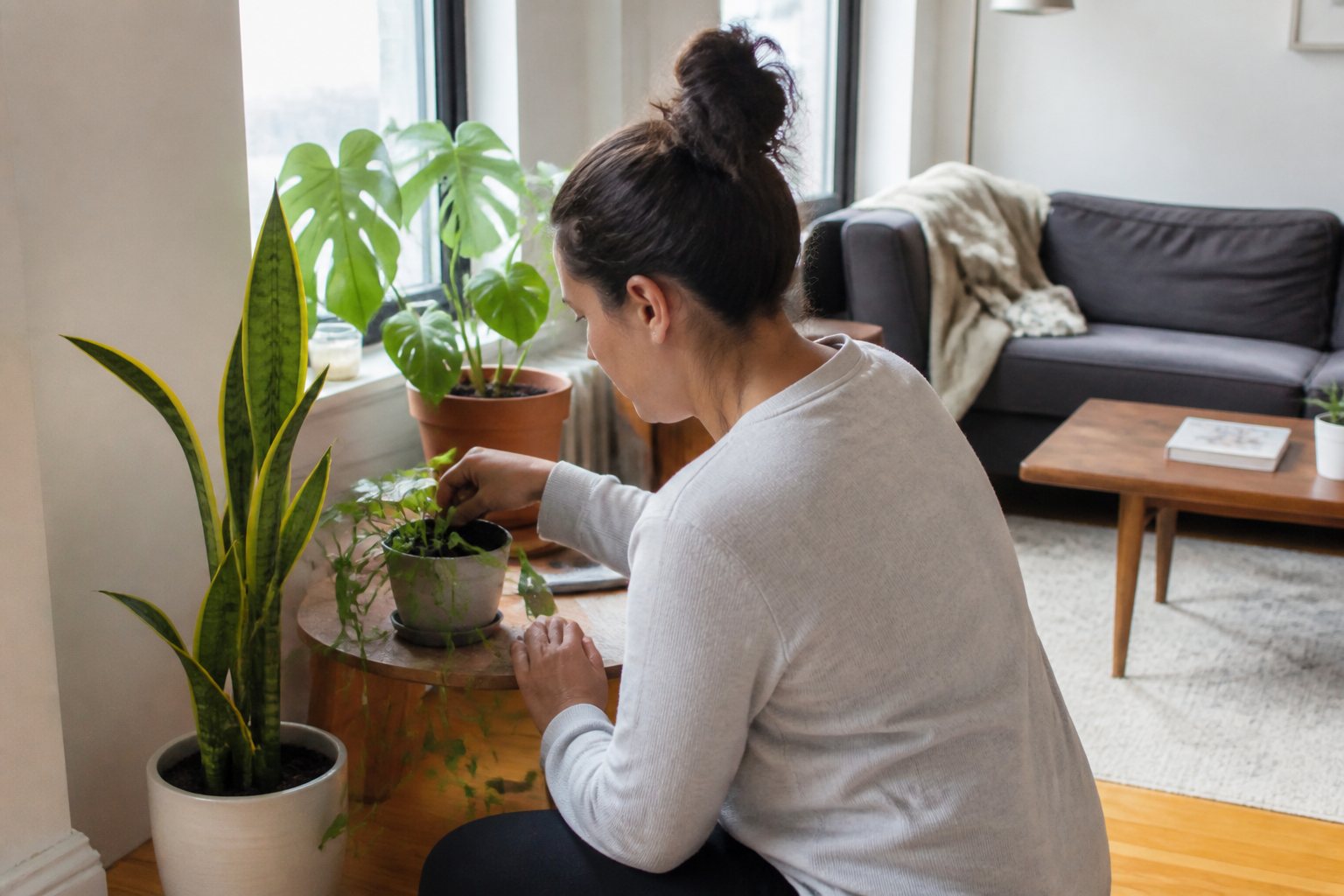
Learning how to care for indoor plants does not have to feel complicated. Most houseplants are more forgiving than they look, especially when you focus on a few dependable habits instead of chasing a perfect schedule. This beginner-friendly guide explains the essentials: light, watering, soil, temperature, humidity, feeding, and what to do when something looks wrong.
Think of plant care as observation rather than a list of chores. A bright windowsill, a pot with drainage, and a quick check of the soil before watering will prevent many of the problems new plant owners run into. Once you understand what your plant is telling you, building an indoor plant routine becomes much easier.
Choosing the Right Indoor Plant
The easiest way to succeed with indoor plants is to match the plant to the conditions you already have. Before buying anything, notice where your home gets the most natural light. A room with a large east- or south-facing window can support many common tropical plants, while a lower-light corner is better suited to plants such as snake plants, ZZ plants, or pothos.
For a first plant, choose one that tolerates small mistakes. Pothos, heartleaf philodendron, snake plant, spider plant, and cast-iron plant are all popular choices because they adapt well to ordinary indoor conditions. They still need care, but they are less likely to decline after one missed watering or a few cloudy days.
Understanding Light
“Bright indirect light” is the phrase you will see most often on plant labels. It means a plant receives plenty of daylight without sitting in harsh, direct sun for hours. A few feet back from a sunny window is often ideal. Direct afternoon sun can scorch delicate leaves, while a spot far from every window may be too dim for growth.
Try this simple test: if you can comfortably read a book in a space during the day without turning on a lamp, many adaptable houseplants can survive there. For faster growth and fuller foliage, move the plant closer to the window while keeping an eye out for bleaching, crispy patches, or excessive heat.
Watering Indoor Plants
Overwatering is one of the most common beginner mistakes. It does not always mean using too much water at one time; often it means watering again before the root zone has had a chance to dry. Roots need oxygen as well as moisture. When soil stays wet for too long, roots can weaken and rot.
Instead of watering every Sunday, check the pot first. Push a finger about one to two inches into the soil. If it feels dry at that depth, most common houseplants are ready for a thorough drink. If it is still cool or damp, wait a few more days and check again. Small pots dry faster than large pots, and plants usually need less water in winter than in summer.
What thorough watering looks like
Water slowly until a little runs out of the drainage hole. This helps moisten the entire root ball and flushes out some mineral buildup. Let the pot drain fully, then empty the saucer so the roots are not left standing in water. A pot without drainage makes this much harder, so use a nursery pot inside a decorative cover pot when possible.
Yellow leaves, soft stems, a musty smell, or soil that stays wet for many days can point to too much moisture. Wilting can be confusing because both dry and overwatered plants may droop. Check the soil before responding: dry soil calls for water, while soggy soil calls for patience, brighter light, and sometimes a closer look at the roots.
Soil and Repotting
Houseplants need a growing medium that holds some moisture but does not stay compacted. A general indoor potting mix works for many plants, but you can improve drainage for plants that prefer drier roots by mixing in perlite, pumice, or orchid bark. Cacti and succulents need a grittier mix, while moisture-loving plants may appreciate a little extra coco coir or fine bark.
Choose a pot that is only slightly larger than the current root ball. A very large pot holds more soil than a small root system can use, which keeps moisture around the roots for too long. When repotting, increase the pot size by roughly one to two inches in diameter for most small and medium plants.
When to repot
Repotting is usually needed every one to two years, not every few months. Signs include roots circling tightly inside the pot, water rushing straight through because the root ball is crowded, or growth slowing even during the active season. Spring and early summer are the easiest times to repot because many houseplants are naturally preparing to grow.
After repotting, give the plant a little time to settle. Avoid heavy feeding right away, and keep conditions steady. A plant may pause briefly while it adjusts, especially if roots were disturbed.
Temperature and Humidity
Most indoor plants are comfortable in the same temperatures people prefer: roughly 65–80°F (18–27°C). The bigger issue is sudden change. Keep plants away from cold drafts, air-conditioning vents, radiator blasts, and glass that becomes very cold overnight. Tropical plants can show stress when temperatures stay below about 55°F (13°C).
Humidity matters most for plants with thin leaves or tropical origins, but you do not need to turn your home into a greenhouse. Grouping plants together, keeping them away from drying vents, and using a small humidifier in a very dry room can help. Pebble trays have only a limited effect; they are fine as decoration, but do not rely on them to solve persistent dry-air problems.
Fertilizing Houseplants
Fertilizer is not plant food in the way sunlight is; it is a supplement that replaces nutrients used from the potting mix. Most houseplants benefit from a balanced fertilizer during spring and summer, when they are actively producing new leaves. Use a diluted liquid fertilizer every four to six weeks, following the label directions.
More fertilizer is not better. Too much can burn roots, leave crusty residue on the soil, and cause leaf edges to brown. If a plant is stressed, newly repotted, very dry, or sitting in low light, solve those issues before fertilizing. During winter, many plants slow down and need little or no feeding.
Create a Simple Weekly Plant Care Routine
A short weekly check is more useful than a strict watering schedule. Walk through your plants and look for changes in soil moisture, leaf color, pests, and light exposure. Rotate pots a quarter turn if one side leans toward the window. Remove yellow or damaged leaves with clean scissors, and wipe dust from broad leaves so they can receive light efficiently.
- Check soil moisture: Water only the plants that are ready.
- Inspect leaves: Look under leaves and along stems for mites, scale, mealybugs, or sticky residue.
- Review light: Move plants a little closer to a window if growth becomes stretched or sparse.
- Empty saucers: Do not let pots sit in drained water.
- Notice patterns: Take a quick photo every month to track growth and recurring problems.
This routine keeps small issues from becoming emergencies. It also helps you learn each plant’s pace: some dry in four days, while others may need two weeks between waterings.
Common Indoor Plant Problems
Yellow leaves
A single older yellow leaf is often normal. Several yellow leaves at once usually point to watering stress, poor drainage, low light, or a recent change in conditions. Check the soil first, then confirm that the pot drains well. If the plant is in a very dark place, move it gradually toward brighter indirect light.
Drooping or limp leaves
Drooping can mean thirst, but it can also signal roots that are staying too wet. Feel the soil and lift the pot: a very light pot is often dry, while a heavy pot with wet soil suggests overwatering. If the plant was recently repotted or moved, give it stable conditions before making more changes.
Brown tips or crispy edges
Brown tips are commonly linked to dry air, inconsistent watering, mineral buildup, or too much fertilizer. Trim only the brown portion if you prefer a neater look, then adjust the likely cause. Using filtered water can help sensitive plants if your tap water is very hard.
Pests
Check new plants before bringing them close to your collection. If you spot pests, isolate the plant and wipe visible insects away with a damp cloth. For many common infestations, insecticidal soap or neem-based products can help when used according to the label. Repeat treatment as needed because eggs may hatch after the first application.
Be Patient With New Growth
Healthy indoor plant care is built on consistency, not constant intervention. Leaves do not repair themselves overnight, and a plant may need several weeks to respond after you improve its light, watering, or soil. Focus on new growth rather than expecting damaged leaves to become perfect again.
Keep notes if you are learning. A simple record of when you watered, repotted, fertilized, or moved a plant can reveal patterns that are easy to miss. With time, you will stop second-guessing every leaf and start recognizing what normal growth looks like in your own home.
Frequently Asked Questions
How often should beginners water indoor plants?
There is no single schedule that works for every plant. Check the soil weekly and water when the top one to two inches are dry for most common houseplants. Adjust for light, temperature, pot size, and season.
Do indoor plants need direct sunlight?
Some plants enjoy direct sun, but many common houseplants prefer bright indirect light. Start with the plant label, then watch for signs of too much sun, such as bleached or scorched leaves, or too little light, such as slow, stretched growth.
Should I mist my houseplants?
Misting provides only a short-lived increase in humidity and can leave water sitting on leaves. It is not necessary for most plants. A humidifier or better placement away from dry vents is more effective when humidity is genuinely low.
What is the easiest indoor plant for a beginner?
Pothos, snake plants, ZZ plants, spider plants, and heartleaf philodendrons are reliable options. Choose the one that best matches the light in your home, then learn its watering rhythm before adding more plants.
When should I fertilize houseplants?
Fertilize lightly during the active growing season, usually spring through summer. Reduce or pause feeding when growth slows in fall and winter, unless a plant is clearly growing under strong supplemental light.
Final Takeaway
The best indoor plant care routine is simple: give each plant appropriate light, check the soil before watering, use a pot with drainage, and respond slowly to changes. Start with one or two forgiving plants, learn from them, and build your collection at a pace that feels enjoyable. Consistent care will do more for your plants than any complicated routine.