
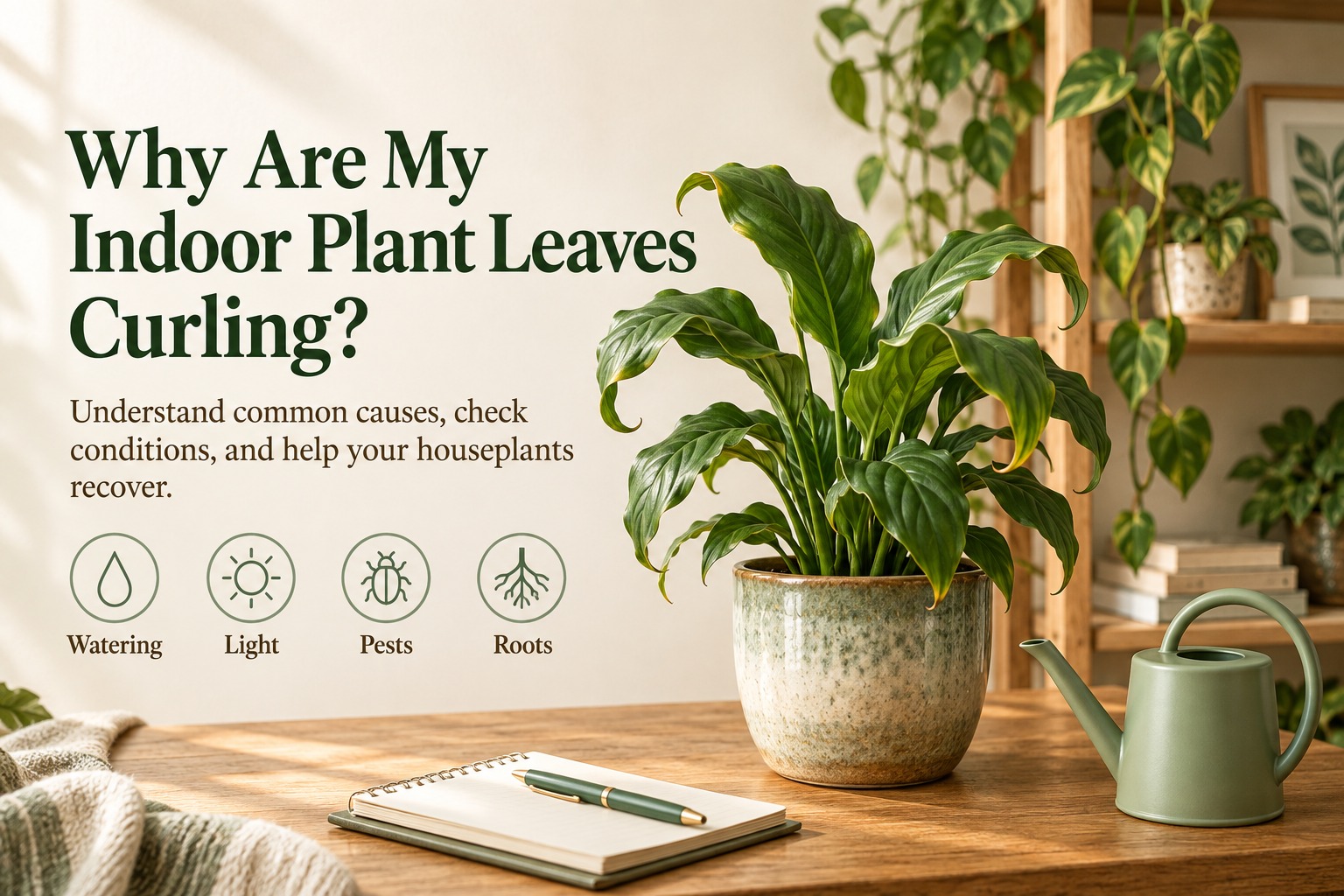
Curling leaves on indoor plants can be a sign that something in the plant’s environment or care routine needs attention. When you notice indoor plant leaves curling, check the plant’s conditions together before deciding on a cause. This curling, where the edges or tips of leaves start to fold or roll, often signals stress caused by factors like improper watering, lighting, or pests. Understanding the reasons behind these changes can help you respond appropriately and restore your plant’s comfort. In this article, we will explore the main causes behind leaf curling in houseplants and provide straightforward steps to help you care for your greenery with confidence.
Table of Contents
- Common Causes of Indoor Plant Leaves Curling
- Water-Related Issues: Overwatering and Underwatering
- Light and Temperature Stress
- Pests and Diseases
- Soil and Root Problems
- How to Treat and Prevent Indoor Plant Leaf Curling
- Proper Watering Practices
- Optimizing Light and Temperature Conditions
- Managing Pests Safely
- Soil and Pot Care
- Frequently Asked Questions
- What should I do if my indoor plant leaves are curling due to underwatering?
- Can too much light cause indoor plant leaves to curl?
- How can I identify if pests are causing the leaves to curl?
Common Causes of Indoor Plant Leaves Curling
Leaves curling is often a visible sign that your plant is facing some kind of stress. Understanding the common reasons behind this can help you respond effectively and maintain your plant’s well-being. Several factors, ranging from watering habits to environmental conditions and pests, may be responsible for your indoor greenery showing curled foliage. Here are some of the most frequent causes that affect leaf shape and health.
Water-Related Issues: Overwatering and Underwatering
Water plays a crucial role in a plant’s health, and improper watering is one possible cause of leaf curling. When a plant is overwatered, its roots can become waterlogged, leading to poor oxygen access and root rot. This impairs the roots’ ability to absorb nutrients and water, causing the leaves to curl as a stress response. On the other hand, underwatering causes the plant to lose turgor pressure because of water scarcity, resulting in dry, shriveled, and curled edges. Both over- and underwatering can cause similar leaf symptoms, so it’s important to evaluate how much and how often you water your plant, considering factors like pot size, soil type, humidity, and temperature.
Light and Temperature Stress
Sunlight and temperature conditions significantly influence leaf health. Excessive direct sunlight can scorch leaves, especially for shade-loving plants, leading to leaf curling as the plant tries to minimize damage and water loss. Insufficient light can weaken growth and may contribute to abnormal or distorted foliage in some plants. Temperature fluctuations or extremes may trigger curling too. Exposure to cold drafts or sudden drops in temperature can cause leaves to curl as the plant attempts to conserve heat, while too much heat without adequate humidity might lead to water stress and curling as well. Matching your plant’s light and temperature preferences is key to avoiding these problems.
Pests and Diseases
Certain pests and diseases can induce leaf curling by damaging leaf tissues or interrupting nutrient flow. Common culprits include spider mites, aphids, thrips, and whiteflies, all of which suck sap from leaves, causing them to curl, distort, or discolor. Fungal infections, such as powdery mildew or leaf spot diseases, may also trigger curling by weakening the leaf structure. Inspect leaf undersides, leaf joints, and new growth for insects, webbing, sticky residue, or feeding damage. Early detection and appropriate pest management can prevent further damage and help restore your plant’s condition.
Soil and Root Problems
The health of the growing medium and roots is fundamental to leaf vitality. Compacted, poorly draining, or nutrient-deficient soil can stress roots and lead to curling leaves. Soil that remains constantly soggy will suffocate roots, while overly dry or poor-quality soil limits nutrient availability. A severely root-bound plant may dry out more quickly or experience root stress, which can contribute to leaf curling. Ensuring your plant’s soil has good drainage, appropriate texture, and sufficient nutrients will support healthy foliage and minimize curling symptoms. For detailed guidance on daily care practices, see the Indoor Plant Care Guide for Beginners: Everything You Need to Know.
How to Treat and Prevent Indoor Plant Leaf Curling
Addressing curled leaves starts with tuning into your plant’s environment and care routine. Keeping an eye on watering habits, light exposure, temperature, pest activity, and soil conditions plays a key role in resolving and preventing curling issues.
Proper Watering Practices
Watering practices can contribute to leaf curling when they do not match the plant’s current needs. Both overwatering and underwatering can cause stress, leading to leaves curling as the plant struggles to maintain its moisture balance. To keep this in check, it’s important to check soil moisture at a depth appropriate for the plant species, as different plants have varying moisture preferences. Generally, water when the soil feels dry at the recommended depth for your plant. Ensuring your pot has adequate drainage helps prevent water from pooling, which can lead to root rot and further stress the plant. For beginners, the guide “How Often Should You Water Indoor Plants? A Beginner’s Guide” provides clear advice on establishing a watering schedule tailored to your plant’s specific needs.
Optimizing Light and Temperature Conditions
Light and temperature greatly impact plant health. Too much direct sunlight can scorch leaves and cause curling, while insufficient light can weaken plant tissue. Find a spot with bright, indirect light suitable for your specific plant species. Temperature extremes can also cause leaf stress; many common tropical houseplants grow well in typical indoor temperatures around 65–80°F (18–27°C), although ideal temperatures vary by species. Avoid placing plants near heaters, air conditioners, or drafty windows to minimize fluctuations and prevent leaf curling caused by environmental stress.
Managing Pests Safely
Pests like spider mites, aphids, or thrips can sap plant vitality, causing leaves to curl. Regularly inspect both sides of leaves for tiny insects, webs, or sticky residue. Removing pests early helps reduce damage. Wipe leaves with a damp cloth when appropriate, or use insecticidal soap labeled for houseplants according to the product directions. Avoid harsh chemicals, especially indoors, to ensure safety for your household and pets while effectively managing infestations.
Soil and Pot Care
Healthy soil and the right pot size promote strong root systems, preventing leaf curl caused by root stress. Repot when the plant shows signs that its current container or potting mix is no longer suitable, such as dense circling roots, unusually rapid drying, or degraded potting mix. Use fresh, well-draining potting mix appropriate for the species, and ensure pots have drainage holes to prevent waterlogging.
Frequently Asked Questions
What should I do if my indoor plant leaves are curling due to underwatering?
If underwatering is causing the leaves to curl, water the plant thoroughly, ensuring the soil is evenly moist. Check soil moisture regularly and adjust watering frequency to keep the soil consistently appropriate, avoiding dry spells.
Can too much light cause indoor plant leaves to curl?
Yes, excessive direct sunlight can stress indoor plants and cause leaf curling. Move your plant to a location with bright, indirect light or filter the sunlight to prevent leaf damage and curling.
How can I identify if pests are causing the leaves to curl?
Look for small insects on the underside of leaves, webbing, sticky residue, or discolored spots. Pests like aphids, spider mites, and thrips commonly cause leaf curling. Depending on the pest and plant species, an appropriately labeled insecticidal soap or horticultural treatment may help. Always follow the product directions.