
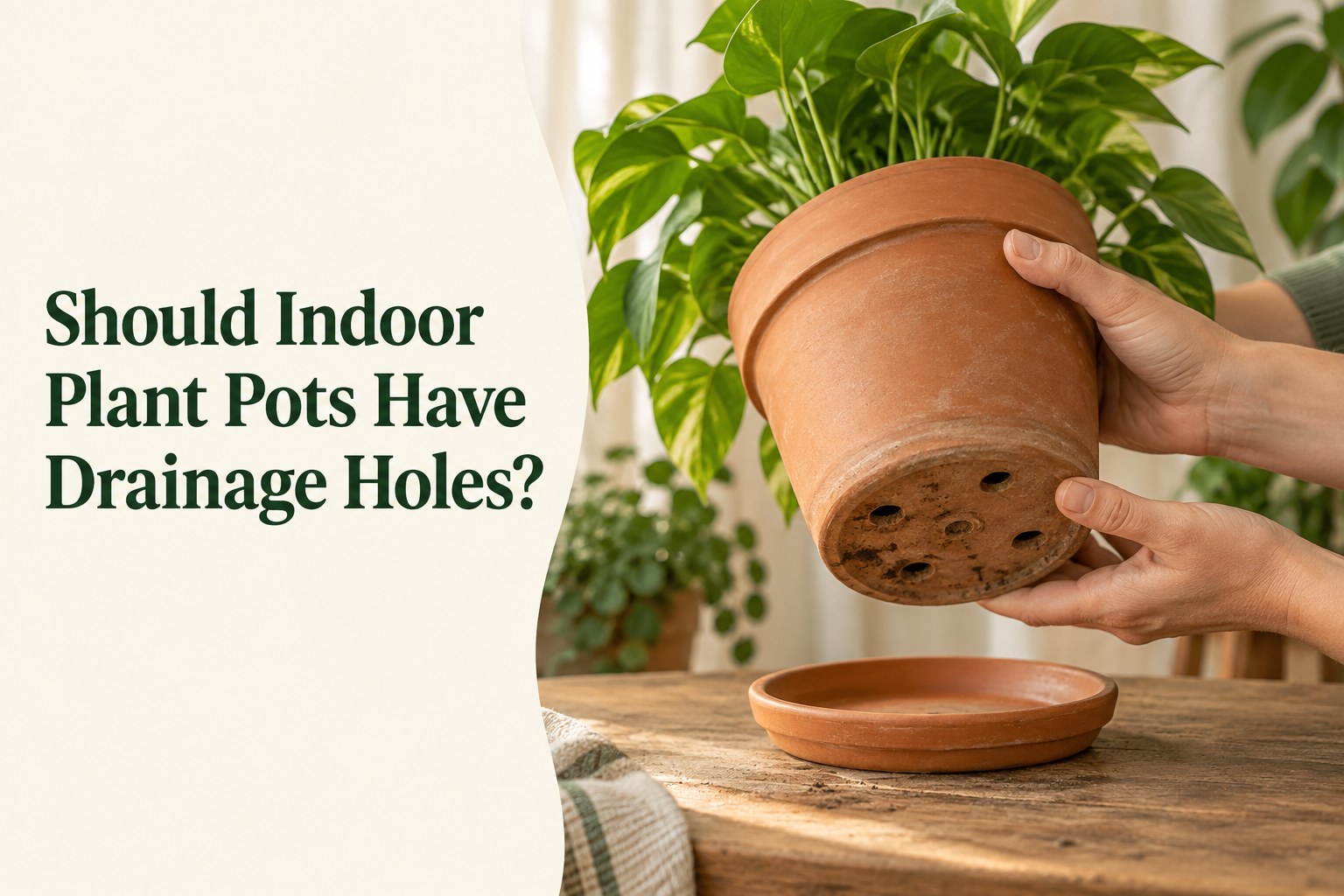
When choosing pots for indoor plants, it’s generally best to pick ones with drainage holes. These openings help excess water escape, which reduces the risk of waterlogged soil and root rot. Indoor plant drainage holes play a crucial role in managing moisture levels around the roots, keeping plants from sitting in stagnant water. This article explores why drainage matters, discusses different pot options, and offers practical tips to care for your plants whether or not your pots have holes.
Table of Contents
- Why Do Indoor Plant Pots Need Drainage Holes?
- How Drainage Holes Help Plant Health
- Risks of Using Pots Without Drainage
- Choosing Pots: With or Without Drainage Holes
- Common Indoor Plant Pot Types and Drainage Features
- How to Manage Plants in Pots Without Drainage Holes
- Watering and Soil Tips for Pots With Drainage
- Watering Frequency Basics
- Soil Choices Supporting Good Drainage
- Frequently Asked Questions
- Can I use a decorative pot without drainage holes?
- What signs indicate poor drainage in my indoor plant pots?
- How does soil type affect indoor plant drainage?
Why Do Indoor Plant Pots Need Drainage Holes?
Drainage holes play a critical role in the well-being of plants kept indoors. They allow excess water to escape from the pot, reducing the chance that it stays trapped around the roots. Without a way out, excess water can accumulate at the bottom and limit oxygen in the root zone. Persistently wet conditions can contribute to root problems. For beginners looking to care for indoor plants effectively, understanding the importance of drainage is a foundational step. For a comprehensive beginner-friendly overview on this topic, consider checking out the Indoor Plant Care Guide for Beginners: Everything You Need to Know.
How Drainage Holes Help Plant Health
Drainage holes give excess water a way to leave the pot, reducing the chance of water pooling around the roots. Roots need access to both moisture and air to function properly. When water drains freely, it can also help flush out excess salts and minerals that build up in the mix from fertilizers or tap water. Drainage holes are useful, but the mix, pot size, watering habits, and growing conditions still determine how long the root zone stays wet.
Risks of Using Pots Without Drainage
Using containers without drainage holes can trap excess water at the bottom and leave roots short of air. Yellowing, wilting, or slow growth can occur in persistently wet conditions, although these symptoms have other possible causes. Excess moisture can also favor fungus gnats. The safer way to use a decorative pot without holes is as a cachepot: keep the plant in a draining nursery pot inside it, then empty any water that collects in the outer pot. Planting directly into a pot without drainage is less forgiving because excess water has no easy way to escape.
Choosing Pots: With or Without Drainage Holes
Selecting the right pot is a key step in caring for houseplants. One common question many plant owners face is whether to choose containers with or without drainage holes. Both types come with their own set of advantages and considerations. Understanding these can help you better manage your indoor garden and make watering easier and more effective.
Common Indoor Plant Pot Types and Drainage Features
Indoor plant pots come in various materials and styles; check the base rather than assuming a terra cotta, ceramic, or plastic pot has drainage holes. Decorative cachepots often lack holes but can hold a draining inner pot. A pot with drainage holes gives excess water a way out, while a saucer can catch runoff and protect your surfaces. Empty the saucer after watering so the pot does not stand in collected water. Drainage holes reduce the chance of excess water remaining trapped, but potting mix, pot size, watering habits, and environmental conditions still affect how long the root zone stays wet.
How to Manage Plants in Pots Without Drainage Holes
The preferred way to use a pot without drainage holes is as a decorative cachepot. Keep the plant in a draining nursery or inner pot, remove that pot for watering, and let excess water drain fully before returning it. Empty any water collected in the cachepot, and never leave the inner pot sitting in standing water. Choose a potting mix suited to the plant and check moisture according to its needs. A moisture meter can be used as an additional reference, together with checking the potting mix, pot weight, and plant condition. For more on deciding when to water, see How Often Should You Water Indoor Plants? A Beginner’s Guide. Planting directly into a container without drainage carries a higher risk of excess water accumulation and is less forgiving than using a draining inner pot.
Watering and Soil Tips for Pots With Drainage
Having drainage holes in your indoor plant pots makes watering and soil choice crucial to keep water flowing properly while supporting root health. How often you water and the type of soil used can prevent common issues like soggy roots or insufficient moisture.
Watering Frequency Basics
Drainage holes allow excess water to escape, but they do not guarantee that the root zone will dry at the right pace. Check the potting mix at a depth appropriate for the species and its root zone rather than relying on a fixed universal depth. Use the plant’s condition, pot weight, mix, and growing conditions to decide when it needs water instead of following a fixed schedule.
Soil Choices Supporting Good Drainage
Choose a potting mix designed for indoor plants rather than garden soil. A light, airy soil blend with components like perlite or pumice promotes quick water drainage, preventing water from staying at the bottom and saturating roots. This complements your pots’ drainage holes by enhancing airflow and moisture balance, which together maintain the right root environment. Avoid heavy or clay-rich soils that hold too much water even if drainage holes are present.
Frequently Asked Questions
Can I use a decorative pot without drainage holes?
Yes. Keep the plant in a draining inner pot, remove it to water, let it drain fully, and empty any collected water from the decorative outer pot. Do not leave the inner pot standing in water. Planting directly into a container without holes makes moisture management less forgiving and increases the risk of excess water collecting around roots.
What signs indicate poor drainage in my indoor plant pots?
Yellowing, wilting, or a sour smell can occur when the root zone stays too wet, but none proves root rot or poor drainage on its own. Check how long the potting mix stays wet, whether water can leave the pot, and the condition of the roots before drawing a conclusion.
How does soil type affect indoor plant drainage?
A potting mix suited to the species helps balance moisture and air around the roots. Structural ingredients such as perlite or pumice may help some mixes, but drainage also depends on pot size, watering, and whether the holes remain open.