
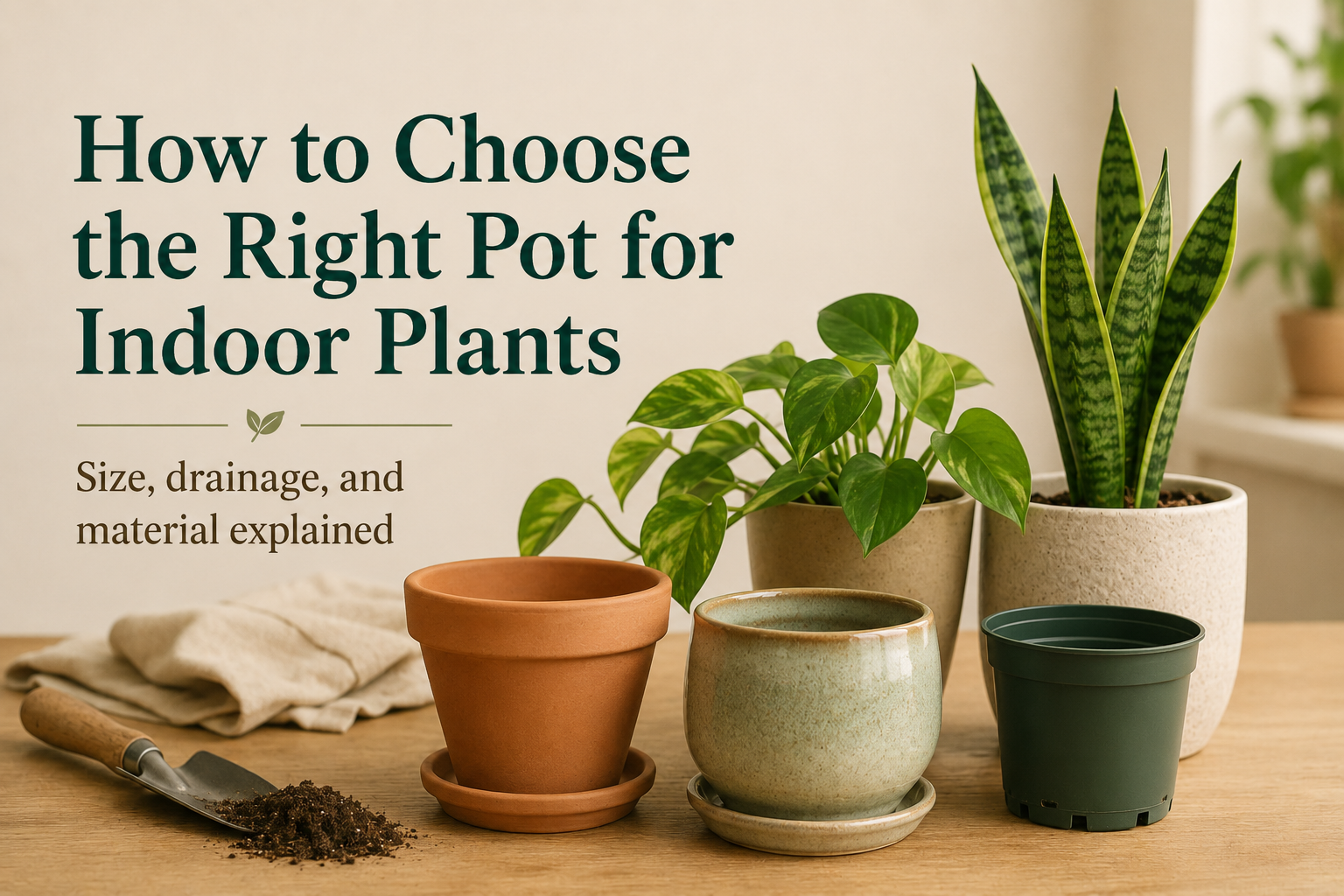
Choosing a suitable pot can make indoor plant care easier, but no single material automatically keeps a plant healthy. To choose the right pot for indoor plants, consider how pot size, drainage, material, potting mix, and watering habits work together. The goal is a container that suits the plant’s root system, growth habit, and moisture needs while also fitting the home environment. Pot material matters, but drainage, pot size, potting mix, and watering habits usually matter more.
Table of Contents
- Why Pot Selection Matters for Indoor Plants
- Effect of Pot Size on Plant Growth
- Importance of Drainage
- How Pot Material Affects Plants
- How to Choose the Right Pot
- Factors to Consider
- Tips for Different Plant Types
- Frequently Asked Questions
- How do I know what pot size is right for my indoor plant?
- Is drainage really necessary for indoor plant pots?
- What pot material is best for indoor plants?
Why Pot Selection Matters for Indoor Plants
A container affects how much room roots have and how water moves through the potting mix, but it works together with the mix and the way the plant is watered. An unsuitable size or poor drainage can make moisture management more difficult. Start with the plant’s root system and care needs rather than choosing by appearance or material alone. For broader care basics, see the Indoor Plant Care Guide for Beginners: Everything You Need to Know.
Effect of Pot Size on Plant Growth
Pot size should provide appropriate room for the root ball without surrounding it with a large volume of unused mix. A modest step up can be a useful starting point for many small or medium houseplants, but one or two standard pot sizes is not a universal rule. Consider the root ball, the overall plant size, its growth habit, and why it is being repotted. A plant with damaged or reduced roots may not need a larger container at all. Avoid jumping to an oversized pot because the extra mix may stay wet longer than the roots can use it.
Importance of Drainage
Excessively wet potting mix reduces oxygen around roots, and prolonged wetness can contribute to root problems. Drainage holes help excess water leave the container, which makes moisture easier to manage. For most beginners, a pot with drainage holes is the safest and easiest choice. If a decorative outer pot has no drainage, use it as a cachepot: keep the plant in an inner nursery or container pot with drainage, remove it for watering when practical, and empty any water left in the outer pot. For more help with timing, see How Often Should You Water Indoor Plants? A Beginner’s Guide.
How Pot Material Affects Plants
Pot material affects evaporation through the container wall, but it is only one part of the drying rate. Unglazed terracotta is porous, so moisture can evaporate through the wall and the potting mix may dry faster. Glazed ceramic is generally much less porous, with lower moisture loss through the wall. Plastic also usually loses little moisture through its wall, but plastic does not automatically cause overwatering. With every material, drying still depends on drainage, potting mix, pot size, light, temperature, and watering habits.
How to Choose the Right Pot
Choose function before finish. A useful order for beginners is: first, an appropriate pot size; second, drainage; third, a suitable potting mix; fourth, realistic watering habits; and fifth, material preference. Material can help adjust drying, weight, and appearance, but it cannot compensate for an oversized pot, unsuitable mix, blocked drainage, or consistently excessive watering.
Factors to Consider
Begin with the root ball and the reason for changing containers. The new pot should hold the roots comfortably without adding much more mix than the plant can use. Check that drainage openings are unobstructed and pair the container with a mix appropriate for the species. Pot depth and shape should also suit the root system and growth habit: shallow-rooted and deep-rooted plants may need different forms, while a tall plant may need a stable base. Then consider how the material’s evaporation rate fits the room’s light and temperature and your watering habits. Weight, portability, and appearance matter, but shape should not be selected on appearance alone.
Tips for Different Plant Types
Match the container to the species and its actual roots rather than relying on broad plant groups. Many succulents and cacti benefit from fast-draining mixes and containers that do not stay wet too long, but ideal depth depends on the species and root system. Plants that use more moisture may benefit from a container that dries more slowly, but they do not automatically need an oversized or plastic pot. Orchids and other epiphytic plants may require specialized containers or very airy mixes depending on the species. For any plant, inspect the root ball and growth habit before deciding whether a wider, deeper, or differently shaped pot is appropriate.
Frequently Asked Questions
How do I know what pot size is right for my indoor plant?
A modest step up can be appropriate for many houseplants, but use the root ball and overall plant size as the main guide. Choose enough room for suitable growth without moving directly to an oversized pot, where unused mix may stay wet longer.
Is drainage really necessary for indoor plant pots?
For most beginners, drainage holes are strongly recommended because they make excess-water management easier. A sealed decorative pot can serve as a cachepot when the plant remains in an inner pot with drainage and leftover water is removed from the outer container after watering.
What pot material is best for indoor plants?
No single material is universally best. Unglazed terracotta dries faster because it is porous, while glazed ceramic and plastic generally have lower moisture loss through the container wall. Choose according to the plant’s needs, the home environment, and your watering habits, together with size, drainage, and potting mix.