
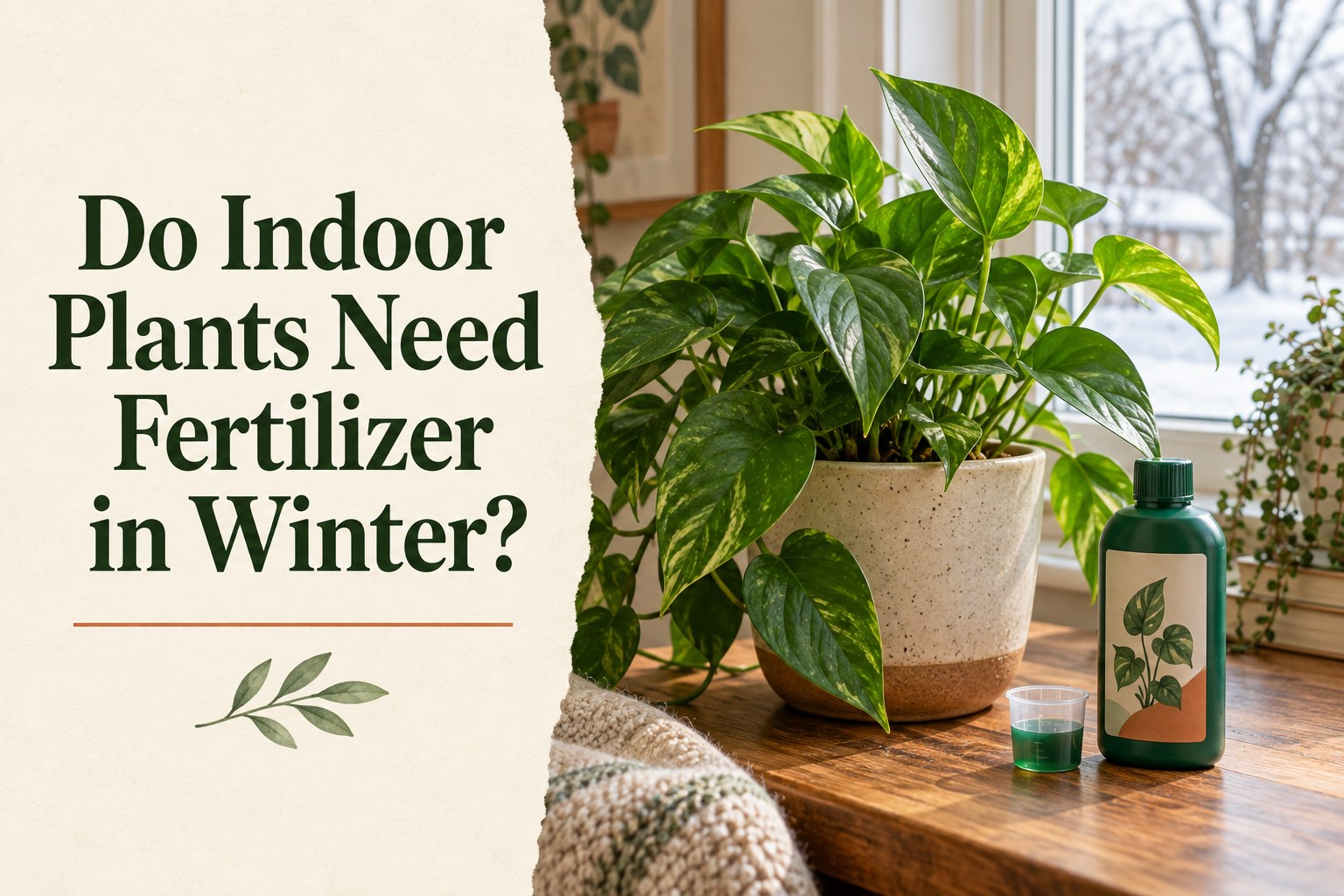
Many indoor plants need less fertilizer when seasonal light decreases and growth slows, but the calendar alone should not determine feeding. To fertilize indoor plants in winter, look at the species, its actual growth, available light, temperature, and potting mix. A plant under grow lights or in a warm, bright room may keep growing, while another may need little or no added fertilizer.
Table of Contents
- Winter Fertilizing Basics for Indoor Plants
- Why Fertilizing in Winter Matters
- Risks of Overfertilizing in Winter
- How to Fertilize Indoor Plants in Winter
- Choosing the Right Fertilizer
- Application Tips for Winter Fertilizing
- Adjusting Your Indoor Plant Care Routine in Winter
- Watering and Soil Considerations
- Light and Temperature Factors
- Frequently Asked Questions
- Is it necessary to fertilize indoor plants during winter?
- What type of fertilizer is best for winter use on indoor plants?
- How does watering affect fertilizing indoor plants in winter?
Winter Fertilizing Basics for Indoor Plants
Seasonal changes can alter conditions indoors, but they do not affect every houseplant the same way. Shorter days may slow growth for some plants; others continue growing under sufficient light and warmth. Check how your plant is actually growing before changing its feeding routine.
Why Fertilizing in Winter Matters
Plants need nutrients to make new growth, but slower growth usually means lower demand for added fertilizer. Less light does not, by itself, create a need to feed. Fresh potting mix, especially a mix that already contains fertilizer, may provide enough nutrients for a time. If a plant is actively producing new leaves under bright conditions or grow lights, feeding may still be appropriate. Consider its species and mix before adding anything.
Risks of Overfertilizing in Winter
Adding fertilizer when a plant is barely growing can leave excess salts in the potting mix and stress its roots. Leaf damage or weak growth can have several causes, so check the plant and its growing conditions before assuming it needs more nutrients. Choose a product suited to the species and follow its label. Do not feed simply because a date on the calendar has arrived.
How to Fertilize Indoor Plants in Winter
Start with the plant rather than the season. Is it making new growth? Does it receive enough light, and does its potting mix already contain fertilizer? The answers will help you decide whether to feed and which product is suitable.
Choosing the Right Fertilizer
Use a fertilizer appropriate for your plant and follow the product label for application and amount. Check whether the potting mix already contains fertilizer before adding more. Liquid and slow-release products differ in how they deliver nutrients; neither is automatically the right winter choice. Match the product to the species, existing mix, and current growing conditions.
Application Tips for Winter Fertilizing
Fertilizer needs vary by species, product formulation, growth rate, light, temperature, and potting mix. Follow the label’s application directions and avoid applying concentrated fertilizer to a severely dry or stressed root zone. If reduced feeding is appropriate, adjust within the manufacturer’s directions rather than relying on a universal dilution rule. Watch how the plant responds; yellowing or slow growth alone does not prove a nutrient shortage.
Adjusting Your Indoor Plant Care Routine in Winter
Indoor light and temperature can change with the season, even when your care habits do not. Check whether those changes have affected your plant’s growth, watering needs, or potting mix before deciding to fertilize indoor plants in winter. For a broader care overview, see the Indoor Plant Care Guide for Beginners: Everything You Need to Know.
Watering and Soil Considerations
Water use may change if light, temperature, or growth changes. Check moisture at a depth appropriate for the species and root zone, then water according to that plant’s needs rather than a winter schedule. A suitable potting mix and drainage holes help avoid prolonged saturation. For more on judging watering needs, see How Often Should You Water Indoor Plants? A Beginner’s Guide. Notice whether the mix contains slow-release nutrients before adding fertilizer.
Light and Temperature Factors
Where daylight decreases, a plant may grow more slowly unless suitable supplemental light makes up the difference. Some plants can continue active growth under grow lights or in bright, warm rooms. Provide light and a reasonably stable temperature appropriate for the species, and keep foliage away from damaging drafts or direct heat. These conditions, along with actual growth, matter more to feeding decisions than the month.
Frequently Asked Questions
Is it necessary to fertilize indoor plants during winter?
Not necessarily. Fertilizer needs depend on the species, actual growth, light, temperature, and nutrients already in the mix. A slower-growing plant may need little or no added fertilizer, while one growing actively under suitable light may still benefit. Follow the product label.
What type of fertilizer is best for winter use on indoor plants?
There is no single best winter fertilizer for every plant. Choose a product labeled for the species, check whether the mix already contains fertilizer, and follow the label. If growth has slowed, adjust feeding within the manufacturer’s directions rather than using a universal dilution.
How does watering affect fertilizing indoor plants in winter?
Watering needs depend on the plant and its growing conditions, not the season alone. Check root-zone moisture according to the species, follow the fertilizer label’s application conditions, and avoid applying concentrated fertilizer to a severely dry or stressed root zone.