
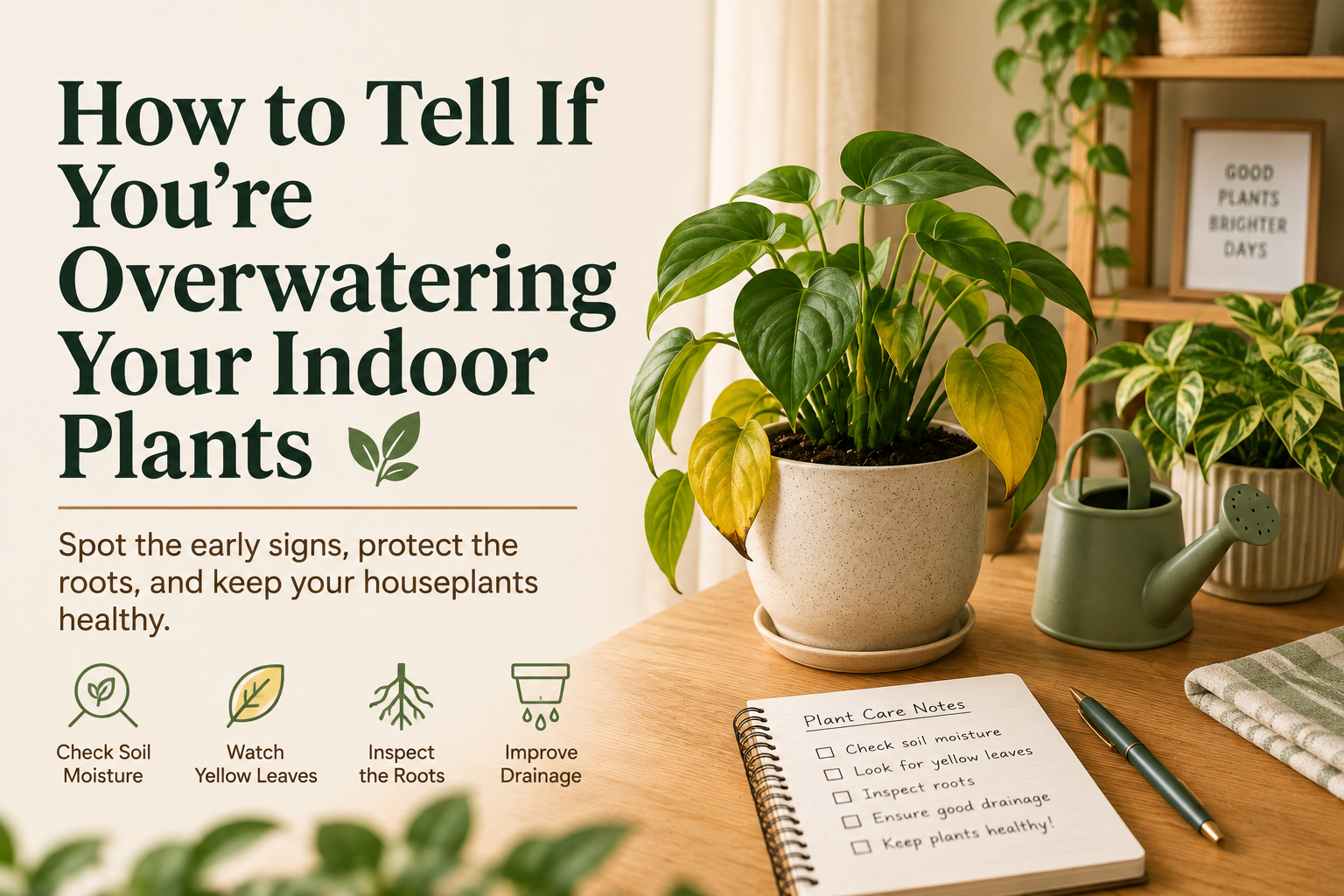
Overwatering indoor plants can cause a range of problems, from yellowing leaves to root rot. Possible early signs include wilting despite moist soil, a musty smell from the pot, and slow growth, but these clues can have other causes too. Excess water can limit oxygen around the roots, leading to stress and decay. Recognizing the pattern and checking the growing conditions can help you respond before the damage worsens.
Table of Contents
- Common Signs of Overwatering Indoor Plants
- Checking Soil Moisture Levels
- Leaf and Stem Symptoms of Overwatering
- Root Health and Signs of Rot
- How to Save an Overwatered Plant
- How to Prevent Overwatering Indoor Plants
- Adjusting Watering Frequency and Method
- Choosing the Right Soil and Pots
- Related Care Tips for Healthy Plants
- Frequently Asked Questions
- How often should I water my indoor plants to avoid overwatering?
- What are the first signs that I might be overwatering my plant?
- Can an overwatered plant recover from root rot?
Common Signs of Overwatering Indoor Plants
Overwatering indoor plants is a common pitfall that can quietly damage them before you notice. Recognizing the warning signs early helps you adjust your care routine to keep your plants thriving. Here are the key indicators to watch for when you suspect too much moisture might be affecting your greens.
Checking Soil Moisture Levels
The first step in identifying if your indoor plant is getting too much water is to assess the soil moisture. Healthy soil should feel slightly damp but not saturated. For many common houseplants, checking the top 1–2 inches of soil is a useful starting point, although the ideal moisture level varies by plant. If the mix remains wet or soggy at the depth that suits the plant, overwatering may be part of the problem. Use that check with the pot’s weight, the mix condition and the plant’s needs; a moisture meter is optional and not perfectly reliable. Proper drainage is also crucial because waterlogged soil can lead to root problems. To learn more about how to balance watering, see our guide titled How Often Should You Water Indoor Plants? A Beginner’s Guide. This resource offers detailed tips on watering frequency tailored to indoor varieties and your home environment.
Leaf and Stem Symptoms of Overwatering
Leaves and stems can show several possible clues when a plant stays too wet. No single symptom proves overwatering, so compare the foliage with the soil and the plant’s recent conditions.
- **Yellowing leaves:** Older leaves may turn yellow, but yellowing can also result from other stresses.
- **Wilting while the soil is wet:** Limp foliage despite moist mix can signal root stress, although it is not a diagnosis by itself.
- **Soft or mushy leaves:** Excess moisture can damage leaf tissue, making leaves feel unusually soft instead of firm.
- **Slow or stunted growth:** Roots that remain short of oxygen may struggle to support new growth.
- **Weak or discolored stems:** Prolonged wet conditions can leave stems weak, darkened or slimy.
Root Health and Signs of Rot
Roots hidden beneath the soil hold critical clues to overwatering problems. When water saturates the soil for too long, roots may begin to rot due to insufficient oxygen. To check root health, carefully remove the plant from its pot and examine the roots. Healthy roots are typically white or light tan and firm. In contrast, roots suffering from rot appear brown or black, feel soft or mushy, and often emit a foul smell. Root rot impairs the plant’s ability to absorb nutrients and water, eventually leading to wilting and death if not corrected. Taking prompt action to reduce watering and improve drainage can sometimes save affected plants from severe decline.
How to Save an Overwatered Plant
Start by pausing watering and checking why the mix is staying wet. Confirm that water can escape through the drainage holes and empty any collected water. If the mix remains wet or the plant is declining, remove it carefully from the pot and inspect the roots. Trim roots that are clearly rotten, soft or collapsing with clean tools, then repot in fresh potting mix suited to the plant. After repotting, give the plant appropriate light and airflow while it recovers. Resume watering only when the plant and mix indicate that it needs water, and keep monitoring its condition rather than following a fixed schedule.
How to Prevent Overwatering Indoor Plants
Keeping your indoor plants thriving involves a balanced approach to watering. Preventing excess moisture is key, as consistently soggy soil can lead to root problems and other issues. To avoid overwatering indoor plants, focus on adjusting how often and how much you water, and ensure you’re using soil and containers that promote proper drainage and aeration.
Adjusting Watering Frequency and Method
Finding the right watering approach depends on the plant type, pot size, indoor climate, and season. Before adding water, check the mix at a depth appropriate to the plant and consider the pot’s weight; for many common houseplants, the top 1–2 inches can be a useful starting point, not a universal rule. Water thoroughly when the plant needs it, allowing excess to drain out completely, and avoid letting pots sit in standing water. Using a watering can with a narrow spout helps direct moisture specifically to the soil, keeping leaves dry and reducing the risk of fungus. Adjust the interval when humidity, temperature, light or the plant’s response changes.
Choosing the Right Soil and Pots
Selecting appropriate soil and containers is crucial in avoiding waterlogged roots. Use potting mix formulated for indoor plants, which balances moisture retention with good drainage through ingredients like perlite or vermiculite. Avoid garden soil that may compact and hold too much water. Containers should have drainage holes to allow excess water to escape, preventing pooling at the bottom. If you prefer decorative outer pots without holes, use them as cachepots and remove excess water regularly. Choosing breathable materials like terracotta also supports air flow to the root zone, helping roots stay healthy and less prone to rot.
Related Care Tips for Healthy Plants
Keeping indoor plants thriving involves a few key care habits beyond just watering. Good light, proper soil, and occasional feeding all contribute to their well-being. Pay attention to your plant’s specific needs and environment to avoid stress and encourage steady growth. For newcomers, understanding these basics can make all the difference in avoiding common pitfalls like overwatering indoor plants.
For broader indoor plant care basics, see Indoor Plant Care Guide for Beginners: Everything You Need to Know.
Frequently Asked Questions
How often should I water my indoor plants to avoid overwatering?
Watering frequency depends on the plant type, pot size, and environment. Check soil moisture before watering and allow soil to dry partially between watering sessions to prevent overwatering.
What are the first signs that I might be overwatering my plant?
Early signs include consistently wet soil, yellowing leaves, wilting despite moist soil, and sometimes a musty smell from the potting mix indicating poor drainage.
Can an overwatered plant recover from root rot?
Recovery depends on how severe the root damage is and how quickly the problem is addressed. Remove the plant to inspect the roots, trim tissue that is clearly rotten, repot in fresh mix suited to the plant, and adjust watering while the plant recovers. Severe damage may not be reversible.