
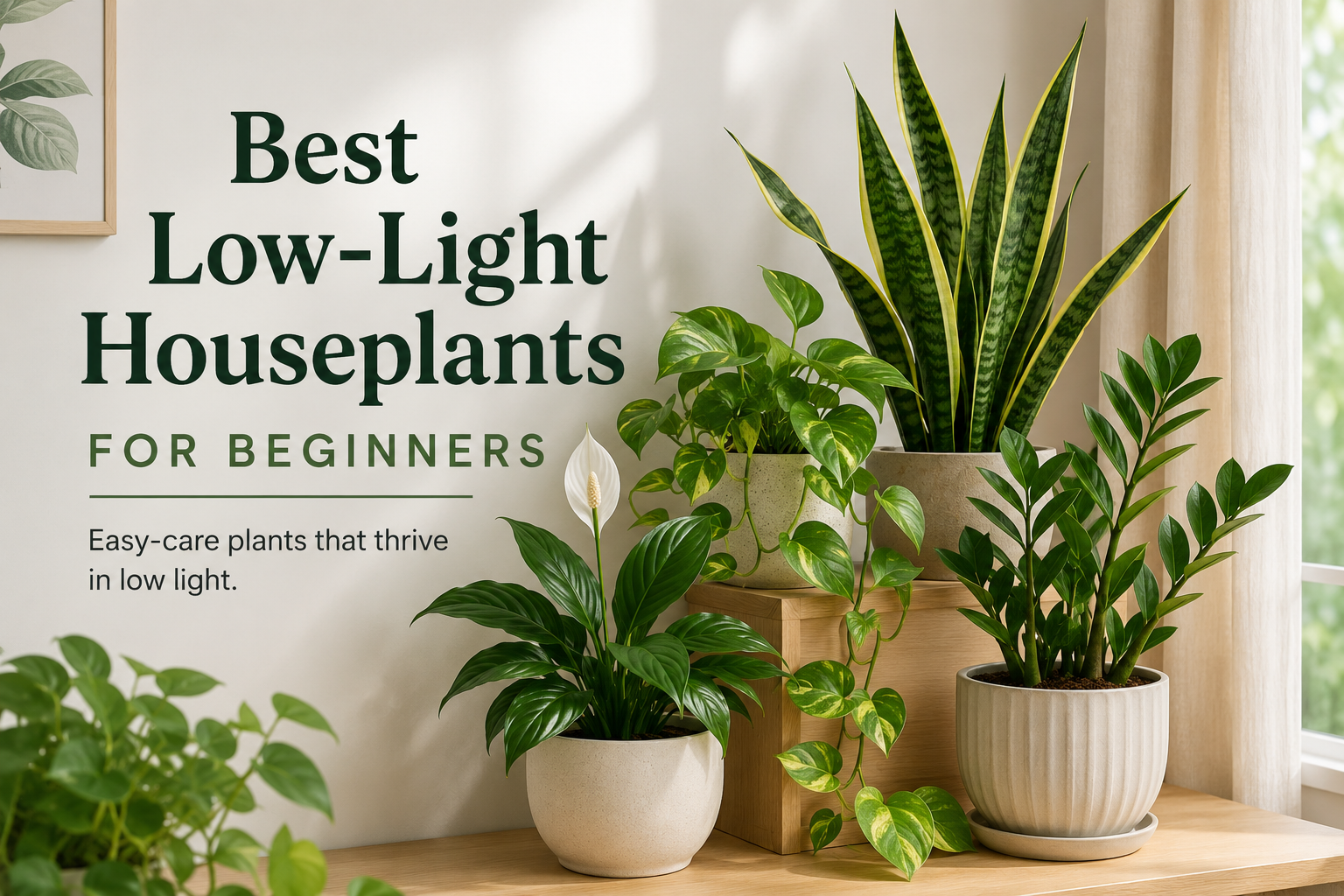
Low-light houseplants tolerate reduced natural light, but low-light tolerant does not mean no-light. They still need usable light for photosynthesis, and growth is often slower in dim rooms; many perform better in brighter indirect light. The best low-light houseplants can suit homes without strong sun, but their light tolerance does not make them automatically low-maintenance. Watering, potting mix, temperature, container drainage, and each species’ needs still matter. The aim is to choose a plant that can cope with the light available and then adjust the rest of its care accordingly.
Table of Contents
- Why Choose Low-Light Houseplants?
- Best Low-Light Houseplants for Beginners
- Snake Plant (Dracaena trifasciata)
- Pothos (Epipremnum aureum)
- Peace Lily (Spathiphyllum)
- ZZ Plant (Zamioculcas zamiifolia)
- Essential Care Tips for Low-Light Houseplants
- Watering and Soil Moisture
- Understanding Light Exposure Needs
- Common Mistakes to Avoid
- Frequently Asked Questions
- How often should I water low-light houseplants?
- Can low-light plants survive in total darkness?
- What are common care mistakes with low-light plants?
Why Choose Low-Light Houseplants?
Plants that tolerate reduced natural light can fit homes where strong sunlight is limited, including rooms with smaller windows or outdoor obstructions. They still need a usable light source, so a dark corner with no natural or suitable artificial light is not an appropriate long-term location.
Their slower growth in dim conditions may reduce how quickly they use water, but it does not remove the need for species-appropriate care. Choosing a plant whose light tolerance matches the room can make observation easier while a beginner learns how the potting mix, temperature, and season affect the plant.
These plants are valued mainly for their appearance and ability to tolerate less intense light. Their leaves, growth habits, and container sizes offer practical options for shelves, floors, and other suitable spots without implying that they meaningfully clean normal household air.
Best Low-Light Houseplants for Beginners
The plants below are known for tolerating dimmer indoor conditions, although none has darkness as its ideal environment. Compare the usable light in your home with each species’ needs, and remember that brighter indirect light often supports stronger growth. Their watering and potting requirements also differ.
For broader indoor plant care basics, see Indoor Plant Care Guide for Beginners: Everything You Need to Know.
Snake Plant (Dracaena trifasciata)
Snake plant (Dracaena trifasciata, formerly Sansevieria trifasciata) has upright, sword-like leaves that may include green, yellow, or silver markings. It tolerates lower light, but growth is generally slower in dim conditions and brighter indirect light may support stronger growth. Before watering, allow the potting mix to dry substantially. The timing depends on the mix, container, temperature, light level, and the plant’s condition rather than a fixed rule.
Pothos (Epipremnum aureum)
Pothos (Epipremnum aureum) is a trailing vine with heart-shaped leaves that may be green or variegated with yellow or white. It can tolerate lower light, but growth may slow and variegation may become less pronounced. Brighter indirect light is often better for fuller growth while harsh direct sun can damage foliage. Its cascading habit suits shelves or hanging containers, provided watering is adjusted to the actual drying rate of the potting mix.
Peace Lily (Spathiphyllum)
Peace lilies (Spathiphyllum) have glossy leaves and may produce white flower-like spathes. They can tolerate lower light, but flowering is usually better with brighter indirect light, and total darkness is not suitable. Drooping can be a sign of water stress, but dramatic wilting should not be used as the routine trigger for watering. Check the potting mix and the plant’s condition instead, then water according to its needs without leaving the roots waterlogged.
ZZ Plant (Zamioculcas zamiifolia)
The ZZ plant (Zamioculcas zamiifolia) has shiny leaflets and an upright, architectural form. It tolerates lower light well, but growth may be very slow in dim conditions; brighter indirect light can support stronger growth. Its underground rhizomes store water, so an excessively wet potting mix can create problems. Check how the mix is drying and consider the container, temperature, and light before watering again.
Essential Care Tips for Low-Light Houseplants
Care in reduced natural light starts with matching each species to a usable light source and adjusting watering to slower growth and drying. Observe the individual plant rather than treating every low-light-tolerant species the same.
Watering and Soil Moisture
Lower light often reduces water use, which can make overwatering more likely. Check moisture according to the specific plant rather than applying a universal depth or calendar rule. Potting mix, pot size, drainage, temperature, light level, and season all affect how quickly a container dries. Make sure excess water can drain, then use the plant’s moisture preferences to decide when to water. For a fuller method, see How Often Should You Water Indoor Plants? A Beginner’s Guide.
Understanding Light Exposure Needs
Even tolerant plants need usable light. A window that provides gentle indirect light may be suitable, while brighter indirect light can support stronger growth for many of these species. Avoid assuming they need direct sun, and do not place them in total darkness. If natural light is inadequate, an appropriately selected and positioned grow light can supplement or replace it. Rotate a plant occasionally if it is leaning strongly toward the light rather than following a rigid schedule.
Common Mistakes to Avoid
A frequent mistake is watering on a bright-light schedule even though the plant is using water more slowly. Choose a potting mix appropriate for the species and avoid one that stays excessively wet for that plant. Drainage and watering habits matter especially when reduced light slows drying. Stagnant or overly humid conditions may contribute to some plant-health problems, but poor air movement does not directly cause pests. Inspect leaves, stems, and the potting mix before deciding what is wrong. Slow growth may simply reflect the available light, so avoid unnecessary fertilizer or abrupt care changes.
Frequently Asked Questions
How often should I water low-light houseplants?
Watering frequency depends on the species and conditions. Low light often slows drying, so check the potting mix according to the plant’s needs and make sure excess water can drain rather than following a fixed calendar or top-inch rule.
Can low-light plants survive in total darkness?
No. No houseplant can remain healthy indefinitely in total darkness because plants need light for photosynthesis. Ordinary room lighting is not automatically sufficient. Artificial grow lights can supplement or replace natural light when they are appropriately selected, positioned, and used for the plant.
What are common care mistakes with low-light plants?
Common mistakes include treating low light as no light, watering on a fixed schedule, using a mix that stays excessively wet, and assuming slow growth always calls for fertilizer. Inspect the plant and its potting mix before changing its care.