
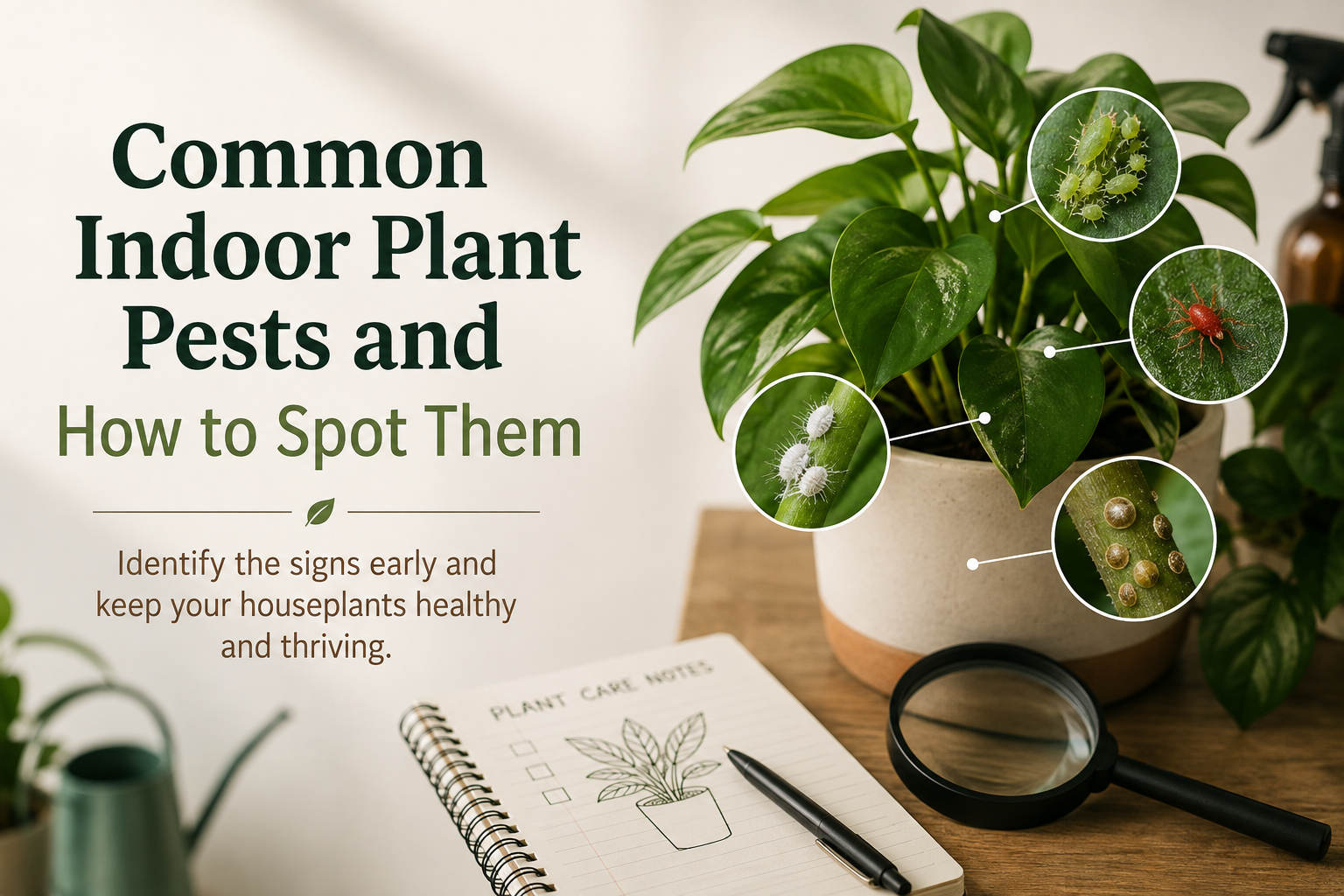
Noticing early signs of trouble on a houseplant can help limit damage before a pest population grows. Identifying common indoor plant pests begins with inspecting the plant closely and comparing several clues, not reacting to one vague symptom. This guide covers aphids, spider mites, scale insects, and mealybugs, including where they tend to appear and the signs they may leave. Once you identify the likely pest, you can choose a treatment that suits both the pest and the plant.
Table of Contents
- Types of Common Indoor Plant Pests
- Aphids
- Spider Mites
- Scale Insects
- Mealybugs
- How to Spot Plant Pest Infestations
- Visual Signs on Leaves and Stems
- Webbing, Residue, and Other Indicators
- Monitoring Frequency and Tips
- Preventing and Managing Pests
- Isolation and Quarantine of New Plants
- Treatment Options for Common Pests
- When to Use Chemical Treatments
- Frequently Asked Questions
- What are the easiest signs to identify aphid infestation?
- How often should I check my indoor plants for pests?
- Are natural remedies effective for controlling common indoor plant pests?
Types of Common Indoor Plant Pests
Houseplants can attract several pests, each with different habits and signs. Learning how aphids, spider mites, scale insects, and mealybugs differ makes identification more reliable and helps prevent treatment of the wrong problem.
Aphids
Aphids are tiny, soft-bodied insects often found in clusters on new growth, stems, or the undersides of leaves. They come in colors like green, black, brown, or even pink. These sap-sucking pests feed by piercing plant tissues, which can cause leaves to curl, yellow, or become sticky with honeydew — a sugary substance that attracts other problems like mold. Because they reproduce rapidly, aphids can quickly overwhelm a plant. You might notice ants tending to aphids since they “farm” the honeydew. Checking your plants regularly for these signs helps catch infestations early.
Spider Mites
Despite their name, spider mites aren’t insects but tiny arachnids, often too small to spot with the naked eye. They thrive in dry, warm environments and usually hide on the undersides of leaves. These pests create fine webbing, which is often the first visible clue of their presence. Infested leaves may look speckled, faded, or dry, and in severe cases, leaf drop can occur. Since they multiply fast, spider mites can quickly distress indoor plants, so it’s important to monitor humidity and leaf condition, especially during dry seasons.
Scale Insects
Scale insects are small, round or oval pests that attach firmly to stems, branches, or leaf veins. Covered by a hard or waxy shell, they look like tiny bumps rather than insects, making them easy to overlook. By feeding on sap, they weaken plants and leave behind sticky honeydew, encouraging sooty mold growth. Their presence can cause yellowing leaves, stunted growth, or branch dieback. Mature scale insects may appear immobile once attached, but younger crawler stages can move to new feeding sites. Management may involve careful manual removal or a product labeled for scale, depending on the plant and the extent of the infestation.
Mealybugs
Mealybugs are soft-bodied insects that form white cottony or waxy clusters, especially around leaf joints, stems, leaf undersides, and other protected areas. They feed by piercing plant tissue and may produce sticky honeydew, much like aphids and scale. Infestations can cause yellowing, distorted growth, and general weakening. Ants may also gather around honeydew-producing colonies. Look for distinct cottony clusters rather than treating a generic powdery coating as proof of mealybugs. For broader care basics that can help you compare pest symptoms with watering, light, or other problems, see the Indoor Plant Care Guide for Beginners: Everything You Need to Know.
How to Spot Plant Pest Infestations
Early inspection can limit damage, but leaf damage alone may not identify the cause. Check leaves, stems, new growth, and protected areas, then compare several clues before deciding whether pests are involved.
Visual Signs on Leaves and Stems
Signs vary by pest and plant. Spider mite feeding often appears as pale stippling or fine speckling, while sap-feeding pests may cause yellowing, curling, or distorted new growth. Sticky honeydew can point toward aphids or scale. Look beneath leaves and around stems for fine webbing, white cottony or waxy clusters, or fixed scale-like bumps. Unusual residue can be a useful clue, but similar damage may also come from watering, light, disease, or physical injury.
Webbing, Residue, and Other Indicators
Fine webbing across leaf undersides, petioles, or stems is a strong clue for spider mites, especially when paired with stippling. Sticky honeydew may come from aphids, scale insects, or mealybugs and can attract ants or support black sooty mold. Shed skins, cottony wax, fixed bumps, or unusual residue can add context. Use several signs together because no single symptom identifies every pest.
Monitoring Frequency and Tips
A weekly check is a useful routine for many homes, but it is not a mandatory schedule. Use a magnifying glass when needed and inspect leaf undersides, new growth, stems, and protected areas. Check more often when a new plant arrives, a nearby plant has pests, or suspicious symptoms appear. If a contagious pest is suspected, isolate the plant while you identify the likely cause and decide on an appropriate response.
Preventing and Managing Pests
Preventing infestations starts with careful inspection, sensible plant care, and prompt isolation when a problem is suspected. Before choosing a treatment, identify the likely pest as closely as possible. Different pests may require different control methods, and leaf damage alone does not confirm the cause. Begin with the least disruptive option that is appropriate for the identified pest and plant.
Inspect new plants before placing them near an established collection and continue monitoring them after arrival. If a problem appears, compare the pest’s location, body shape, webbing, residue, and plant damage before selecting a control method.
Isolation and Quarantine of New Plants
New plants can carry hidden pests or diseases that easily spread to existing indoor greenery. To prevent this, keep new additions isolated in a separate, well-lit spot for at least two weeks. During this quarantine period, closely check for any signs like small insects, sticky residue, or damaged leaves. This cautious step provides a valuable buffer to catch issues early, so you avoid contaminating your whole indoor collection.
Treatment Options for Common Pests
Treatment should match the identified pest, the plant, and the extent of the infestation. Small colonies may sometimes be managed by manually removing visible pests or rinsing foliage when that is suitable for the plant. If you consider insecticidal soap, a neem-based product, or horticultural oil, first check that the product is labeled for the target pest, plant, and intended setting. Follow the label exactly, including its application method and frequency, and test a small area when the label or plant guidance recommends it. Do not assume that a product described as natural is harmless, and do not use dish soap or homemade pesticide mixtures.
Repeat an application only when the product label directs you to do so; there is no universal weekly interval. Good care does not eliminate every pest, but avoiding chronic stress can make inspection and recovery easier. See How Often Should You Water Indoor Plants? A Beginner’s Guide for practical watering guidance.
When to Use Chemical Treatments
Some infestations may require a pesticide treatment, but use only a product labeled for the target pest and intended setting, including indoor use where relevant. Identify the pest first and follow every label instruction for preparation, application, protective measures, ventilation, and frequency. Do not use more product or apply it more often than the label allows.
Treat only plants for which the product is appropriate, and isolate treated plants when the label or situation calls for it. If the pest is uncertain or no labeled option fits, seek qualified local advice rather than improvising an off-label treatment.
Frequently Asked Questions
What are the easiest signs to identify aphid infestation?
Aphids are usually found in clusters on new growth, causing curling or yellowing leaves. You might spot tiny green, black, or white insects and sticky honeydew residue under leaves.
How often should I check my indoor plants for pests?
A weekly check is a useful routine for many homes, especially beneath leaves and around new growth. Inspect more often when a new plant arrives, a nearby plant has pests, or suspicious symptoms appear.
Are natural remedies effective for controlling common indoor plant pests?
Some pests can be managed with manual removal or a properly labeled low-impact product, but the right option depends on the pest and the plant. Identify the likely pest first, follow the product label, and avoid treating neem oil or any other product as a universal solution.