
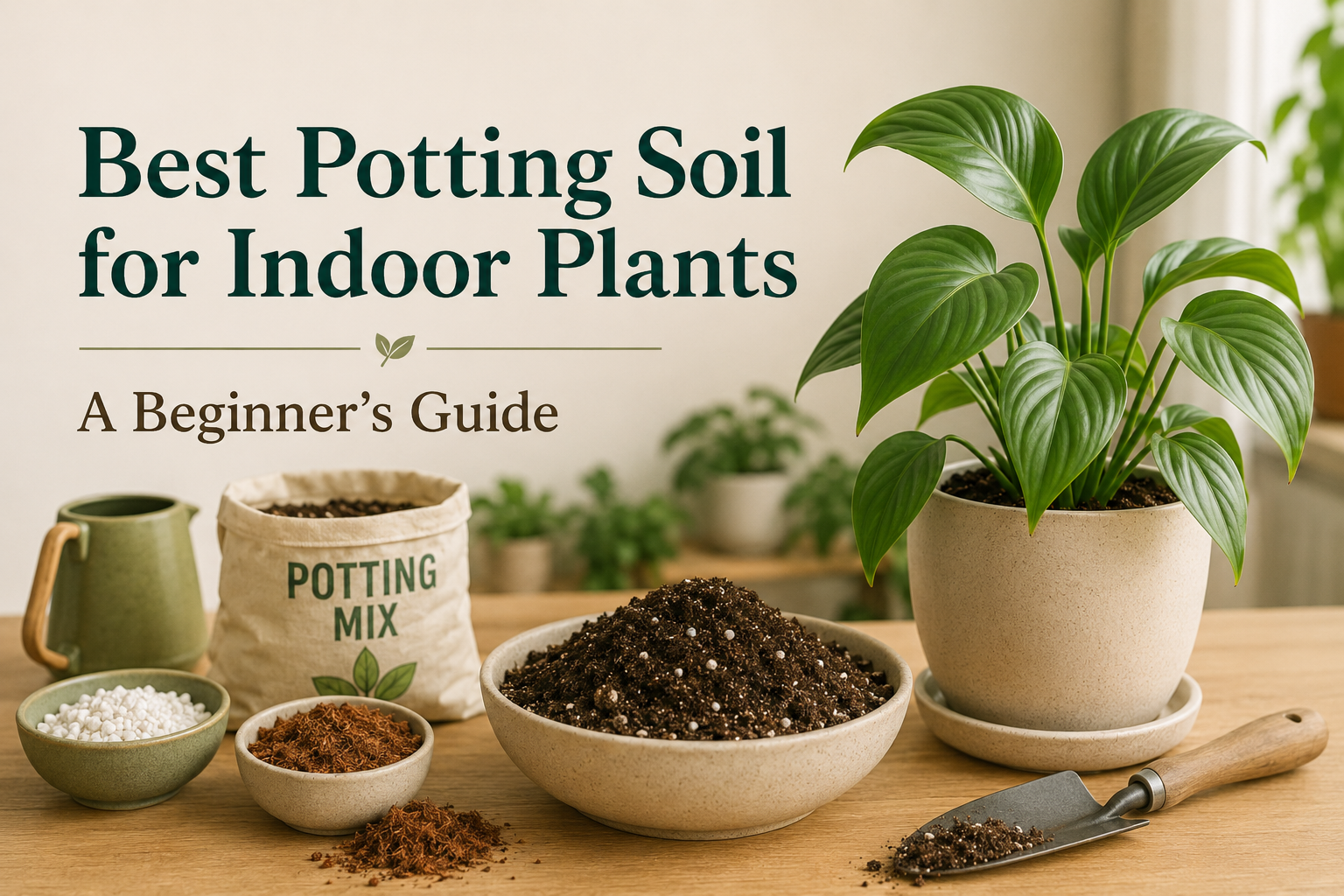
There is no single best potting mix for every houseplant. The best potting soil for indoor plants depends on how much moisture a species prefers, how quickly excess water should drain, and how much air its roots need. A fern may benefit from a mix that holds moisture longer, while a succulent generally needs a faster-draining container mix. Pot size, drainage holes, indoor conditions, and watering habits also affect how a mix behaves. Common ingredients include peat moss or coco coir for moisture retention and perlite, pumice, or bark for structure and root aeration. Some products also contain compost, amendments, or fertilizer. Understanding these roles makes it easier to choose a mix that fits the plant instead of searching for one universal recipe.
Table of Contents
- Why Soil Quality Matters for Indoor Plants
- Key Components of the Best Potting Soil
- Organic Matter and Nutrients
- Drainage and Aeration Materials
- Soil pH and Beneficial Microbes
- Choosing the Right Soil for Different Indoor Plants
- Common Potting Mixes Explained
- Soil Preparation Tips for Beginners
- Frequently Asked Questions
- How often should I change the potting soil for my indoor plants?
- Can I use outdoor soil for my indoor plants?
- Is it necessary to add fertilizer to potting soil?
Why Soil Quality Matters for Indoor Plants
Potting mix supports a plant in the limited space of a container. Its structure affects how water moves through the pot, how long moisture remains available, and how much air reaches the roots. A compacted or poorly matched mix can drain too slowly, dry too quickly, or leave too little air space. The right balance varies by plant, so the aim is not to keep every mix equally moist. Instead, choose a texture that suits the species and check the mix before watering. For a practical method, see How Often Should You Water Indoor Plants? A Beginner’s Guide.
Key Components of the Best Potting Soil
Choosing a suitable indoor plant mix starts with understanding what each ingredient does. A container mix may combine moisture-retentive materials, coarse particles that create air space, and a separate nutrient source. The proportions matter more than the presence of any single ingredient. Beginners can focus on three practical questions: Does the mix hold an appropriate amount of moisture for the plant, can excess water move through it, and does its structure leave enough air around the roots?
Organic Matter and Nutrients
Peat moss, coco coir, and aged bark are often included for structure, moisture retention, and aeration. They should not automatically be treated as a complete source of plant nutrition. Some organic ingredients may contribute small amounts of nutrients, while compost, other amendments, or added fertilizer may provide more depending on the product. Check the bag label to learn whether fertilizer is already included and how long the manufacturer expects it to last. When nutrients are needed, consider the plant species and whether it is actively growing, follow the fertilizer label, and start conservatively. A stressed plant should not be fertilized automatically before watering, light, drainage, and root conditions have been checked. Excessive fertilizer concentration can contribute to salt buildup in a container.
Drainage and Aeration Materials
Perlite and pumice mainly help increase air space and improve drainage. Coarse bark can also add structure, although it behaves differently as it breaks down over time. Vermiculite holds more moisture than perlite, so the two are not interchangeable in every situation. A moisture-loving plant may benefit from some vermiculite, while a plant sensitive to prolonged wetness may need a coarser, faster-draining mix. These ingredients can help reduce the risk of overly wet root conditions, but no single amendment prevents root rot. Pot choice, drainage holes, watering habits, temperature, and the plant’s condition also matter.
Soil pH and Beneficial Microbes
Many commercial indoor plant mixes are already formulated within a suitable pH range for common houseplants. Plants with known special pH requirements may need more specific guidance, but beginners generally do not need to modify a commercial mix unless there is a clear reason. Routine additions of lime or sulfur can create new problems when the starting pH and the plant’s needs are unknown. Some products also contain microbial inoculants. Microbes may influence decomposition and nutrient cycling, but they are not a primary beginner criterion for choosing a potting mix, and their presence should not be treated as a guarantee of root health or protection from disease.
Choosing the Right Soil for Different Indoor Plants
Different indoor plants have different root environments in nature, so their container mixes should not all behave the same way. Succulents and cacti generally benefit from a gritty mix that drains quickly and helps reduce prolonged wetness. Many ferns prefer a mix that retains moisture longer without becoming compacted. Orchids and some epiphytic plants may need a much chunkier mix with generous air space. Matching the texture to the species is more useful than choosing a product solely because it is labeled for houseplants.
If you’re just starting, it’s helpful to combine this knowledge with additional resources like the Indoor Plant Care Guide for Beginners: Everything You Need to Know to build your confidence in selecting and preparing soil for your indoor garden.
Common Potting Mixes Explained
An all-purpose indoor potting mix can work for many common houseplants, particularly when its moisture retention matches the plant’s needs. Success also depends on using a suitable pot size, providing drainage holes, and adjusting watering to the plant and indoor conditions. Read the ingredient list rather than assuming every all-purpose product behaves the same way.
Specialized orchid mixes often contain chunky bark and other coarse materials that leave substantial air space around the roots. Cactus and succulent mixes usually contain a higher proportion of mineral or coarse ingredients so water moves through more quickly. Some moisture-retentive mixes use coir, peat moss, or vermiculite. These labels are useful starting points, but the plant species, ingredients, and conditions in the home still deserve attention.
Understanding these differences helps you compare products and decide whether a small adjustment is appropriate. Change one feature for a clear reason, such as adding a coarse ingredient when a suitable mix stays wet for too long. Avoid combining amendments without knowing whether they increase drainage, retain moisture, or affect nutrient concentration.
Soil Preparation Tips for Beginners
A suitable commercial mix may be ready to use without modification. If a plant needs faster drainage, perlite or pumice can increase air space, while a moisture-retentive ingredient may be appropriate for a species that dries too quickly. Any change should reflect the plant’s needs rather than a universal recipe. Improving drainage can help reduce overly wet root conditions, but it does not replace correct pot size, drainage holes, or careful watering.
Coco coir or peat moss can increase moisture retention, but either can keep a mix wet longer than intended when used heavily. Garden soil is generally a poor substitute for container mix because it can compact in a pot and may drain unpredictably. A packaged product intended for containers provides a more practical starting point for most beginners.
For most common houseplants, beginners can use a reputable commercial mix without routinely testing or adjusting its pH. Seek plant-specific guidance only when a species has a known special requirement or there is clear evidence that pH is contributing to a problem.
Do not reuse potting mix from a plant that had pests, disease, root rot, or an unknown problem. Healthy old mix may sometimes be reused or refreshed when it still has a loose structure, drains normally, and has no signs of contamination. Discard mix that is compacted, foul-smelling, badly degraded, or behaving unpredictably with water. For a beginner, fresh container mix is often the simpler choice when the old material’s condition is uncertain.
Frequently Asked Questions
How often should I change the potting soil for my indoor plants?
Inspect the plant and potting mix instead of relying on a fixed calendar. Compaction, poor drainage, water moving through the pot differently, root crowding, or badly degraded mix can indicate that repotting or refreshing is worth considering. Some plants may need attention sooner, while others can remain comfortable in the same mix much longer.
Can I use outdoor soil for my indoor plants?
Garden soil is usually too dense and unpredictable for containers and may contain pests, weed seeds, or disease organisms. A mix formulated for containers generally provides more reliable drainage and air space for indoor plant roots.
Is it necessary to add fertilizer to potting soil?
Not always. First check whether the potting mix already contains fertilizer, then consider the plant species and whether it is actively growing. If fertilizer is appropriate, follow the product label and use it conservatively. Do not add fertilizer simply because a plant looks stressed; check watering, light, drainage, and root conditions first.