How often should you water indoor plants? For beginners, this can feel confusing. Some plants need water every few days, while others may be happy for two weeks or more. A fixed calendar rarely works because watering depends on the plant, pot, soil, light, temperature, humidity, and season.
The most reliable approach is simple: check the soil and observe the plant before watering. Once you understand what dry, healthy, and overly wet conditions look like, watering becomes much easier.
Why There Is No Perfect Watering Schedule
Indoor plants do not all use water at the same rate. A small pothos in bright light may dry out much faster than a large snake plant in a shaded room. A plant in a small clay pot may need water more often than the same plant in a large plastic pot.
Your home also changes throughout the year. Indoor air may be warm and dry during winter, while summer heat and stronger sunlight can increase evaporation. Even two plants of the same type may need different watering schedules if they are placed in different rooms.
Instead of asking, “Should I water every Sunday?” ask:
- Is the soil dry enough?
- Does this plant prefer to dry between waterings?
- Is the pot draining properly?
- Has the plant’s environment changed recently?
These questions will give you a better answer than a fixed routine.
What Affects How Often Indoor Plants Need Water?
Plant type
Different plants have different moisture preferences.
Plants such as pothos, peace lilies, spider plants, and ferns generally prefer evenly moist soil, although they should not sit in water. Snake plants, ZZ plants, cacti, and many succulents prefer the soil to dry more thoroughly between waterings.
Tropical plants may need more frequent checks, especially during active growth. Drought-tolerant plants often need much less water. Always consider the plant’s natural habits rather than treating every houseplant the same way.
Soil moisture
The moisture level in the soil is usually the most useful factor for beginners. The surface may look dry while the lower part of the pot is still wet. On the other hand, compacted soil can sometimes repel water and appear dry even when the root ball is unevenly moist.
Checking below the surface gives you a better idea of what is happening around the roots.
Pot size
Small pots contain less soil and dry out quickly. Large pots hold more moisture and may stay wet for much longer.
A plant in a pot that is much larger than its root system may be especially vulnerable to overwatering. The extra soil can remain wet for days, even when the plant is not using much water.
Drainage
A drainage hole allows extra water to leave the pot. Without one, water can collect around the roots and cause root stress or rot.
If your plant is in a decorative container without a drainage hole, consider keeping it in a plastic nursery pot with holes inside the decorative pot. Remove it for watering, let it drain fully, and then return it to the cover pot.
Light
Plants use water more quickly in bright light because they are usually growing and losing moisture through their leaves. Plants in low light often grow slowly and use less water.
Moving a plant from a dim corner to a bright window can change its watering needs. Check the soil more frequently after any major change in light.
Temperature and humidity
Warm rooms can dry soil faster, especially when combined with strong light. Cool rooms usually slow water use.
Humidity also affects how quickly plants lose moisture through their leaves. Dry air from heating or air-conditioning may increase water loss, although the soil is still the best place to begin when deciding whether to water.
Season
Many indoor plants grow most actively during spring and summer. They may need water more often during this period.
Growth often slows in fall and winter, so the soil may remain wet longer. Do not continue a summer watering schedule automatically when the plant is using less water.
How to Check Whether an Indoor Plant Needs Water
Use your finger
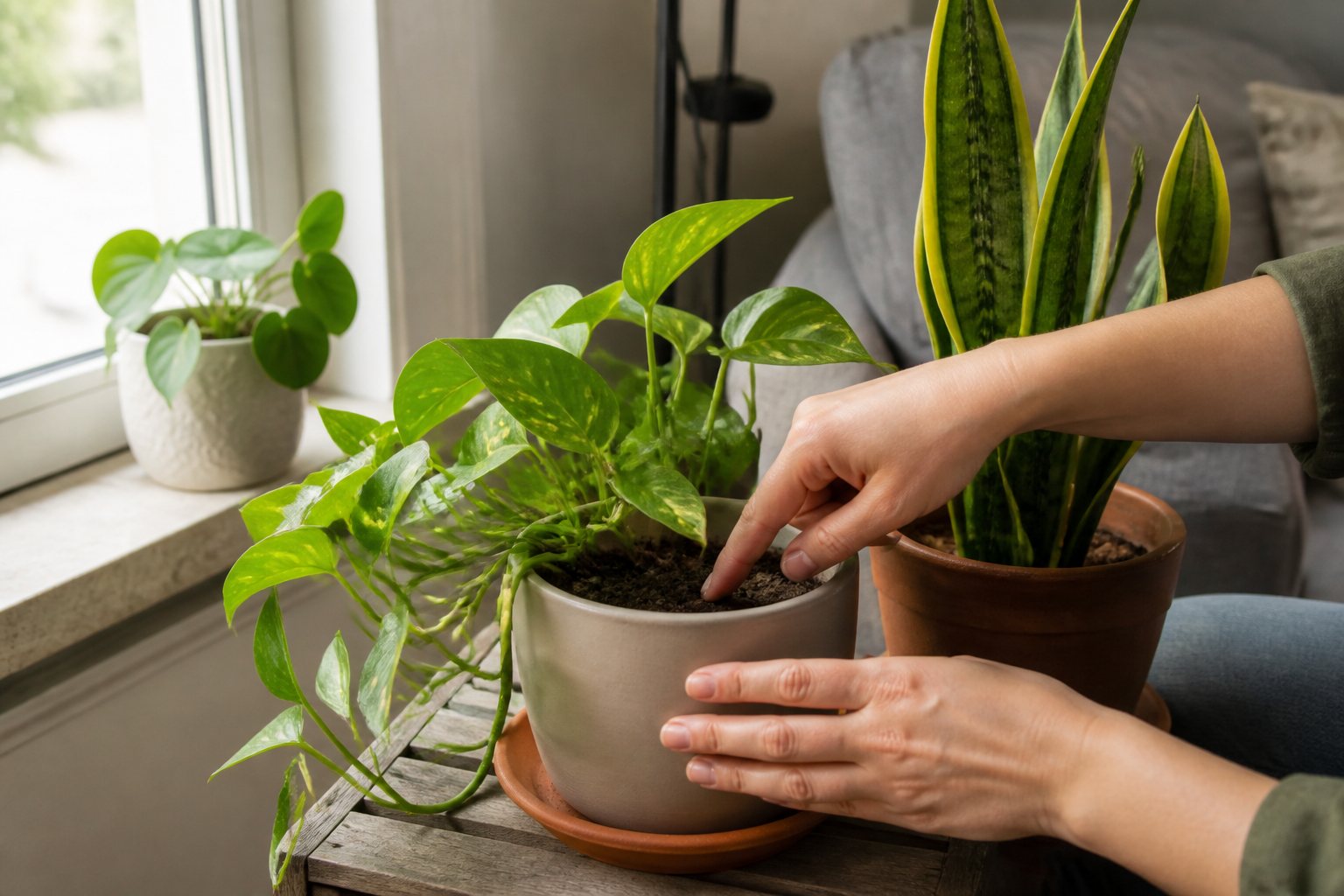
For most small and medium houseplants, push your finger about one to two inches into the soil. If it feels dry at that depth, the plant may be ready for water. If the soil feels cool and damp, wait and check again later.
For larger pots, the top layer can be dry while the lower soil remains wet. You may need to check in more than one spot or use a wooden stick.
Lift the pot
After watering, notice how heavy the pot feels. As the soil dries, the container becomes lighter. With practice, lifting the pot can become a quick way to estimate moisture.
This method works best when you compare the same plant over time. It is less useful if the pot is very heavy or difficult to move.
Use a wooden stick
Insert a clean wooden skewer or chopstick several inches into the soil. Pull it out and examine it. If it comes out with damp soil attached, the lower root zone may still be moist. If it is mostly clean and dry, the plant may need water.
Be careful not to damage thick roots, and do not rely on this method alone for plants with very compact soil.
Look at the pot and soil
Dry soil may pull away slightly from the sides of the pot. It may also feel lighter and look paler. These signs can help, but they should be combined with a deeper soil check.
Do not water only because the surface looks dry. Always consider how much moisture remains below the surface.
How to Water Indoor Plants Correctly
When a plant needs water, water thoroughly rather than adding a small amount every day.
Pour water slowly over the soil until a little begins to drain from the bottom. This helps moisten the root ball evenly. If water runs straight down the sides and out of the pot, the soil may be very dry or compacted. Pause between pours and allow the soil to absorb the water.
Let the pot drain completely. Empty any saucer or outer container so the roots are not left standing in water.
Some plants may need a different approach. Succulents and cacti often benefit from a thorough watering followed by a longer dry period. Plants in very small pots may need more frequent checks. The goal is not to use the same amount of water for every plant but to match the method to the plant and pot.
Signs of Underwatering
Underwatering means the plant is not receiving enough moisture for its needs. Common signs include:
- Dry, brittle, or crispy leaf edges
- Leaves that curl inward
- Wilting or drooping leaves
- Soil pulling away from the sides of the pot
- A very light pot
- Slow growth
- Lower leaves drying and dropping
A thirsty plant may recover quickly after watering, but severe or repeated underwatering can damage roots and leaves.
If the soil has become extremely dry and water runs through without soaking in, water slowly in stages. You may need to wait a few minutes between small pours so the soil can absorb moisture.
Signs of Overwatering
Overwatering is often caused by watering too frequently, poor drainage, or soil that holds too much moisture. Signs may include:
- Yellowing leaves
- Soft or weak stems
- Soil that stays wet for many days
- A musty smell
- Mold or algae on the soil surface
- Leaves dropping even though the soil is wet
- Fungus gnats around the pot
Overwatering does not always mean that too much water was added at once. It often means the plant was watered again before the root zone had time to dry.
If the soil is consistently soggy, pause watering and check the drainage hole. Make sure the pot is not sitting in water and that the soil is not tightly compacted.
Root Stress and Root Rot
Roots need both moisture and oxygen. When soil stays wet for too long, roots can become stressed and begin to decay. This is especially common in pots without drainage or in soil that holds too much water.
Root stress may appear above the soil as yellow leaves, wilting, slow growth, or a plant that looks thirsty despite wet soil. These symptoms can be confusing because they resemble underwatering.
If you suspect root problems, gently remove the plant from its pot and inspect the roots. Healthy roots are usually firm and pale, tan, or naturally darker depending on the plant. Rotten roots may be soft, black, brown, or unpleasant-smelling.
Remove badly damaged roots with clean scissors and repot the plant in fresh, well-draining soil if necessary. Avoid immediately watering on a strict schedule afterward. Let the plant’s condition and soil moisture guide your next watering.
A Simple Beginner Watering Routine
Use this checklist once or twice a week:
- Look at each plant rather than watering the entire collection automatically.
- Check the soil one to two inches below the surface.
- Feel the pot’s weight if you are familiar with how it feels when dry.
- Consider the plant type and whether it prefers to dry more or less between waterings.
- Check that the drainage hole is clear.
- Water slowly and thoroughly when the plant is ready.
- Allow excess water to drain completely.
- Empty the saucer or outer container.
- Make a note if a plant dries much faster or slower than expected.
- Recheck plants after changes in light, temperature, or location.
This routine takes only a few minutes and becomes easier as you learn each plant’s normal pattern.
For broader guidance on light, soil, humidity, fertilizer, and common problems, see our Indoor Plant Care Guide for Beginners.
Common Beginner Watering Mistakes
Following a fixed calendar
Watering every Monday may be convenient, but it does not account for changing conditions. Use the calendar as a reminder to check plants, not as an automatic instruction to water.
Giving small amounts too often
A small splash may wet only the surface while leaving the deeper roots dry. When watering is needed, water thoroughly and let the pot drain.
Ignoring drainage
Even a careful watering routine can fail if excess water has nowhere to go. Always check the container and drainage hole.
Treating wilting as proof of thirst
Wilting can result from dry soil, damaged roots, heat, or recent stress. Check the soil before adding more water.
Changing several things at once
If a plant looks unhealthy, avoid immediately moving it, repotting it, fertilizing it, and watering it heavily. Make one informed change at a time so you can understand what helps.
Frequently Asked Questions
How often should I water indoor plants?
Many houseplants need watering about once every one to two weeks, but this is only a general starting point. Check the soil instead of following a fixed schedule. Plants in bright light or small pots may need water more often, while plants in low light or large pots may need it less often.
Should I water indoor plants from the top or bottom?
Top watering is usually simplest. Pour water over the soil until some drains from the bottom. Bottom watering can help very dry soil absorb moisture, but the pot should not sit in water indefinitely.
Is tap water safe for houseplants?
Many plants tolerate ordinary tap water. However, some sensitive plants may react to very hard water, chlorine, or mineral buildup. If you notice white residue on the soil or leaf-tip problems, try filtered water and observe whether the plant improves.
Should I water plants less in winter?
Often, yes. Many plants grow more slowly in winter and use water more gradually. Check the soil before watering and keep plants away from cold drafts while avoiding dry heat vents.
Why is my plant drooping even though the soil is wet?
Wet soil with drooping leaves can indicate overwatering, poor drainage, root stress, sudden temperature changes, or insufficient light. Check the roots and drainage before adding more water.
Can I use a moisture meter?
A moisture meter can be helpful, but it should not replace observation. Readings may vary depending on soil type and placement. Use the meter along with a finger check, pot weight, and knowledge of the plant’s preferences.
Should I mist plants instead of watering them?
Misting does not replace watering the roots. It may briefly increase surface humidity but usually has little lasting effect. If a plant needs water, soak the soil thoroughly and let it drain.
Final Takeaway
The best answer to “How often should I water indoor plants?” is not a number of days. Water when the plant and soil indicate that it is ready.
Check below the surface, consider the plant’s environment, use a pot with drainage, and water thoroughly when needed. With a little observation, you will learn which plants dry quickly, which prefer longer dry periods, and how seasonal changes affect them.