
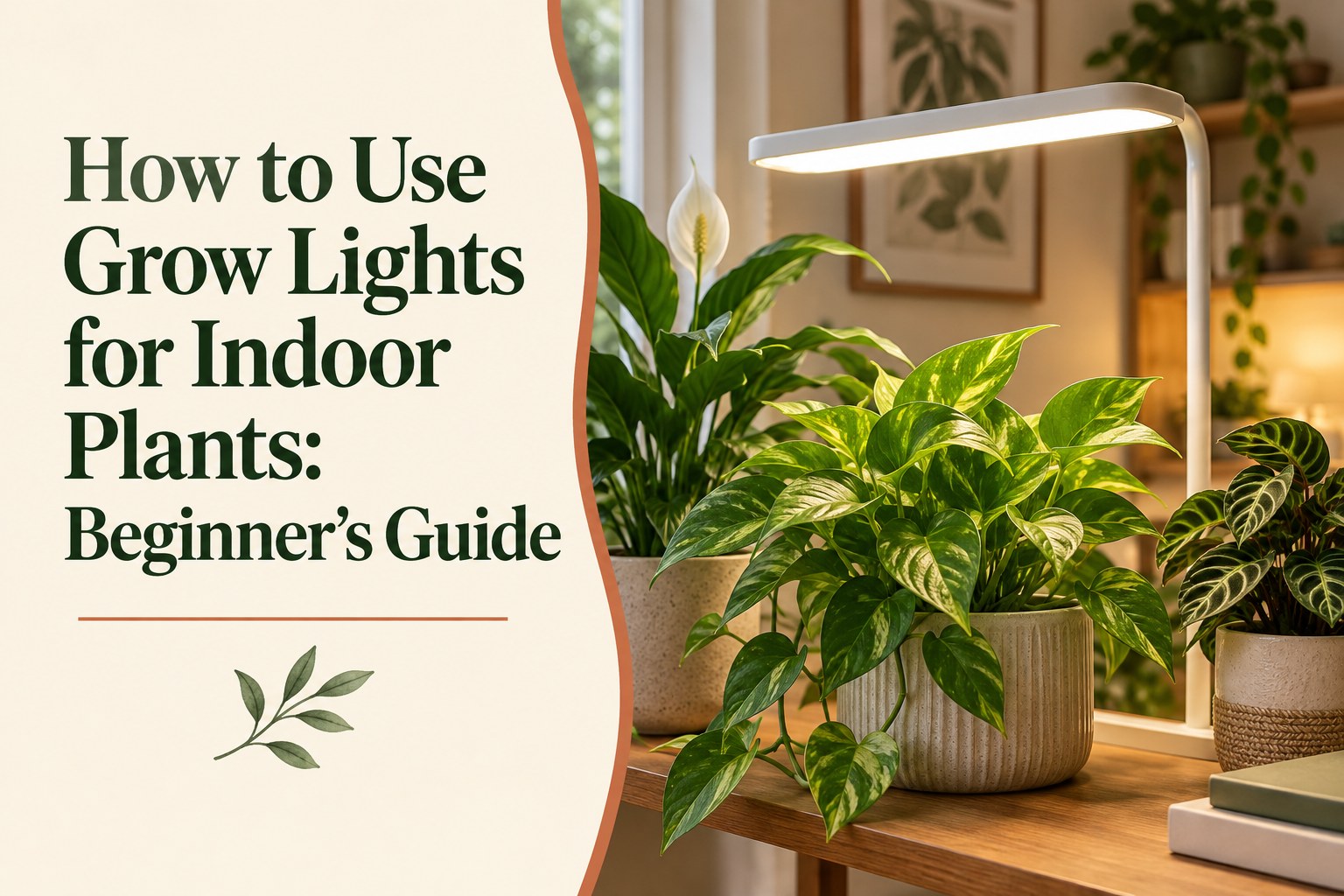
Grow lights for indoor plants are artificial light sources designed to support photosynthesis, especially when natural sunlight is limited. They can supplement or replace natural light when the fixture provides enough usable light for the plant; not every indoor plant needs an additional lamp. Understanding how to choose the right type of light, where to position it, and how long to use it each day can make a significant difference in plant health and development. With simple guidance on these key points, beginners can confidently set up effective lighting tailored to their plants’ needs.
Table of Contents
- Why Grow Lights Are Important for Indoor Plants
- Types of Grow Lights for Indoor Plants
- LED Grow Lights
- Fluorescent Grow Lights
- Incandescent Grow Lights
- How to Choose the Right Grow Light
- Consider Light Spectrum
- Measure Light Intensity
- Budget and Energy Use
- Setting Up and Using Grow Lights
- Placement and Distance from Plants
- Lighting Schedule and Duration
- Safety Tips and Maintenance
- Frequently Asked Questions
- How long should I keep grow lights on my indoor plants each day?
- Can I use any type of light bulb as a grow light?
- Where should I position the grow light relative to my plants?
Why Grow Lights Are Important for Indoor Plants
Indoor plants rely on light to perform photosynthesis, the process that converts light into energy to grow and thrive. In many indoor settings, especially in rooms with limited windows or during darker months, natural sunlight isn’t enough for plants to get the light they need. Inadequate lighting may contribute to slow growth, weak stems, and pale leaves, although those symptoms can also have other causes.
Grow lights for indoor plants can supply usable light for photosynthesis when daylight is insufficient. Their effectiveness depends on output, placement, operating time, and the species being grown. When using artificial lighting, it’s also important to monitor water needs since soil moisture can change under grow lights; for useful tips on that, see How Often Should You Water Indoor Plants? A Beginner’s Guide. Incorporating grow lights creates a stable environment conducive to healthier, more robust plant development indoors.
Types of Grow Lights for Indoor Plants
Choosing the right lighting is essential for indoor gardening success. There are several common types of grow lights, each with their own advantages and ideal uses depending on your plants and setup. Understanding these options can help you select the best source of light to support growth and development inside your home or growing space.
For broader indoor plant care basics, see Indoor Plant Care Guide for Beginners: Everything You Need to Know.
LED Grow Lights
LED grow lights have become increasingly popular due to their energy efficiency and long lifespan. Many LEDs are energy-efficient, but heat and light output vary considerably between fixtures. Follow the maker’s clearance guidance: even a relatively cool LED can deliver excessive light or cause heat damage when placed too close. White and other grow-light spectra can support growth when the intensity suits the plant. These lights typically have a higher upfront cost but offer savings over time through lower electricity bills and less frequent replacements.
Fluorescent Grow Lights
Fluorescent lights are a budget-friendly option favored for seedlings and low-light plants. They generally run cooler than incandescent bulbs, but their output and safe working distance still depend on the fixture. Check its recommended spacing rather than assuming close placement is safe. Compact fluorescent lights (CFLs) and T5 fluorescent tubes are common varieties suitable for small to moderate growing spaces. While their energy use is more than LEDs, fluorescents are still reasonably efficient and widely available in gardening supply stores.
Incandescent Grow Lights
Incandescent bulbs have low energy efficiency and relatively high heat output, which can damage foliage when placed too close. Compared with suitable LED or fluorescent grow lights, they generally provide less useful plant-light output per unit of electricity. Because of these drawbacks, an appropriate LED or fluorescent fixture is usually a more practical choice than an incandescent bulb.
How to Choose the Right Grow Light
Compare spectrum, intensity, coverage, and running costs before choosing a fixture.
Consider Light Spectrum
Plants rely on specific wavelengths for photosynthesis. When picking a light, look for models offering a full or balanced spectrum that mimics natural sunlight, usually including blue and red light ranges. Both blue and red wavelengths contribute to growth, and plants also use other parts of visible light. Spectrum alone does not determine success; choose a fixture with suitable output and coverage for the species rather than relying on its color or a ‘full-spectrum’ label.
Measure Light Intensity
For plant lighting, PPFD describes the amount of photosynthetically active light reaching an area each second. PAR names the relevant wavelength band, rather than an intensity measurement; lumens describe brightness to human eyes. Look for a fixture’s PPFD information at the proposed distance and compare it with your species’ requirements. Light needs also change with growth stage, so no single intensity suits every plant. Positioning the light at the right distance also impacts effectiveness—too far reduces benefits, too close risks damage.
Budget and Energy Use
Electricity costs and upfront prices are important practical considerations. LED grow lights often offer energy efficiency and longer lifespans compared to traditional fluorescent or incandescent options, reducing both power bills and replacement frequency. Balance your initial outlay with expected energy use, and consider timers or dimmers to optimize operational costs, ensuring your investment suits your financial and environmental preferences.
Setting Up and Using Grow Lights
Properly arranging your artificial lights is key to getting the most out of them. Understanding how to position and operate your grow lights ensures your plants receive the right amount and type of illumination they need to thrive indoors.
Placement and Distance from Plants
The positioning of your grow lights directly impacts how well your plants grow. Start with the fixture manufacturer’s placement guidance and adjust for the plant’s light needs, measured output, and any daylight it receives. There is no universal safe distance for all lamps or houseplants. Too close, and you risk leaf burn or overheating; too far, and the plants may stretch or fail to get enough light. Adjustable fixtures or hanging solutions allow you to modify height as your plants grow, keeping the optimal distance consistent. Pay attention to the light spread as well—ensure all parts of the plant canopy receive sufficient coverage, avoiding shadows or uneven lighting.
Lighting Schedule and Duration
Creating an appropriate daily lighting routine helps mimic natural light cycles. Choose the daily duration for the species, fixture intensity, and available natural light, retaining a suitable light-dark cycle. Using a timer can simplify this process, ensuring consistent exposure day after day. It’s important to research your specific plant’s light needs—some may prefer longer or shorter illumination periods. Avoid continuous 24-hour light as it can stress plants and disrupt natural growth rhythms. Adjust schedules seasonally or as plants mature to support their changing requirements.
Safety Tips and Maintenance
Safety and upkeep are important for both your plants and your home. Choose grow lights with proper certifications and avoid placing wiring in wet areas. Allow adequate ventilation around the lights to disperse heat and reduce fire risks. Unplug the fixture before cleaning it according to its instructions; dust or debris can reduce light output. Check bulbs and fixtures periodically—replace any flickering or malfunctioning components promptly. By maintaining your grow light setup, you ensure consistent performance and minimize hazards during indoor gardening.
Frequently Asked Questions
How long should I keep grow lights on my indoor plants each day?
There is no single duration for every houseplant. Consider the species, lamp intensity, and natural light together, and use a timer for an appropriate light-dark cycle. Longer operating time does not make an unsuitable fixture safe or effective.
Can I use any type of light bulb as a grow light?
Some white household LEDs can support plants if they deliver enough usable light at a safe distance for an appropriate duration. Not every bulb or room-lighting setup will do that. A suitable grow light with clear output and placement specifications can make setup easier.
Where should I position the grow light relative to my plants?
Use the fixture’s recommended spacing as a starting point, then assess light at leaf level and the species’ needs. Check for excessive heat and changes in foliage, and adjust height or output as needed. Do not assume all LEDs can sit the same distance from leaves.