
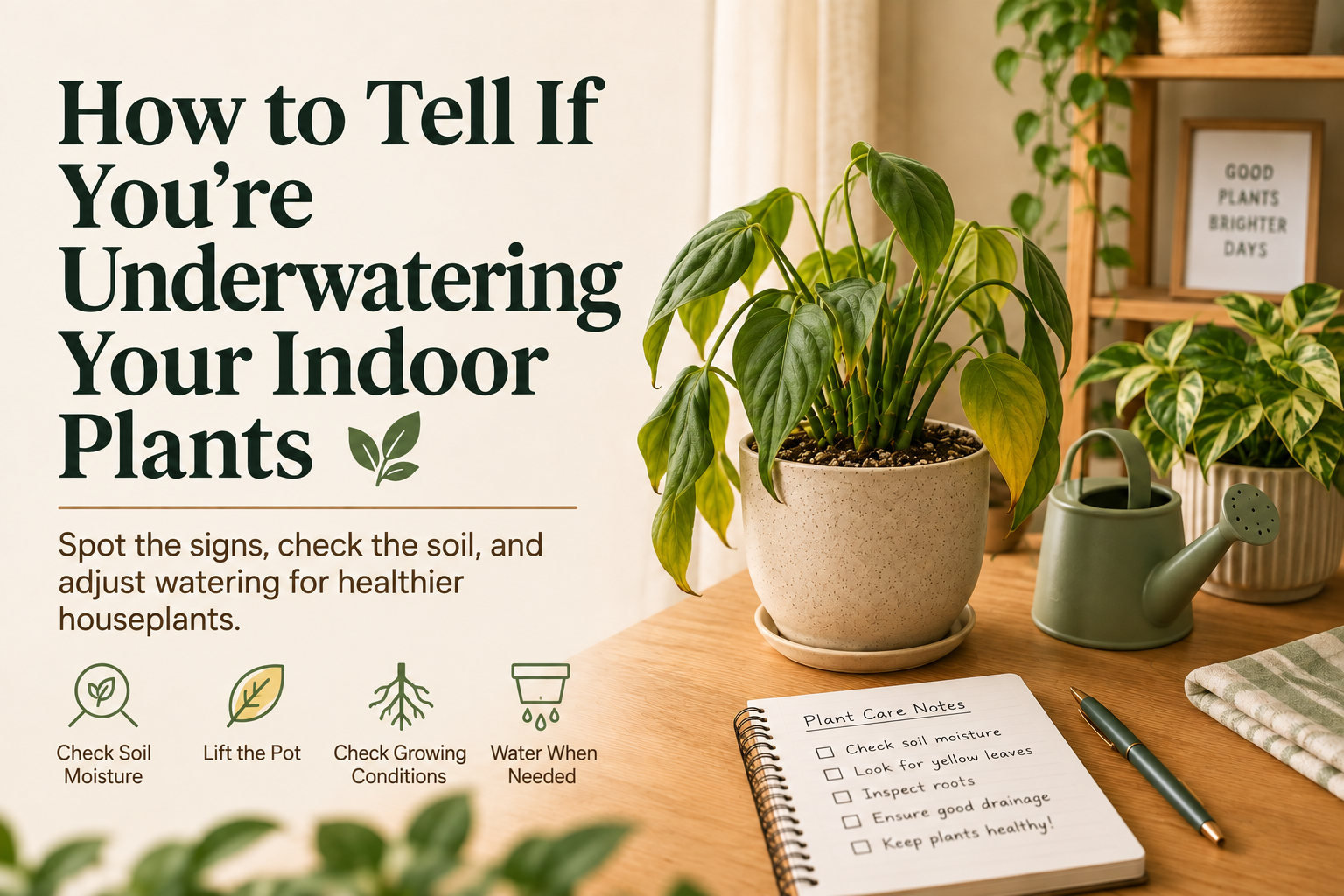
Possible signs that you’re underwatering your indoor plants include dry potting mix, a noticeably lighter pot, wilting or drooping leaves, and dry or crispy leaf edges. Because these symptoms can have other causes, check the soil, pot weight, and recent growing conditions together before concluding that the plant needs more water.
Table of Contents
- Signs Your Indoor Plants Are Underwatered
- Leaf and Stem Symptoms
- Soil and Pot Signs
- Common Causes of Underwatering Indoor Plants
- Watering Frequency Issues
- Improper Soil and Drainage
- How to Fix Underwatering Problems
- Adjusting Your Watering Routine
- Improving Soil and Pot Conditions
- Frequently Asked Questions
- How often should I water my indoor plants to avoid underwatering?
- Can underwatering cause permanent damage to indoor plants?
- How does soil type affect underwatering risks?
Signs Your Indoor Plants Are Underwatered
While underwatering can look similar to other plant problems, several clues become more useful when they appear together with unusually dry potting mix. Compare the plant’s condition with its soil, pot weight and recent growing conditions before changing care.
Leaf and Stem Symptoms
Leaves and stems can show several possible clues when a plant is short of water. Leaves may curl inward or develop crispy, dry edges, and leaf tips can turn brown and fragile while the overall texture feels brittle. In some cases, leaves droop or wilt and new growth slows. Yellowing can also occur, although it is not specific to underwatering and may have other causes. Stems may feel dry or less firm, but no single symptom proves the diagnosis. Because wilting and yellowing can also occur with overwatering, compare the foliage with soil moisture and recent watering conditions.
Soil and Pot Signs
The soil and pot can offer useful context, but should be read together with the plant’s symptoms. If the mix is unusually dry well below the surface and the pot feels much lighter than normal, the plant may not be receiving enough water. A dry, cracked or dusty surface can be another clue, but surface dryness alone is not enough for every species. Roots emerging from drainage holes or circling densely inside the pot may indicate that the plant is becoming root-bound, which can cause the potting mix to dry more quickly. Lift the pot when it is freshly watered and again when it is dry to learn the difference in weight. Combine that check with visual cues and the Indoor Plant Care Guide for Beginners: Everything You Need to Know.
Common Causes of Underwatering Indoor Plants
One key reason your indoor greenery might be struggling is simply not getting enough water, yet the causes go beyond just skipping a watering session. Several factors can lead to underwatering indoor plants, from watering habits to soil conditions, each contributing to insufficient moisture reaching the roots. Understanding these common causes helps you adjust care routines to meet your plant’s needs better.
Watering Frequency Issues
Water needs differ by species, potting mix, pot size, light, season and indoor conditions. Some plants prefer to dry more between waterings, while others need more even moisture. Rather than following a fixed schedule, check the mix and plant regularly, then adjust when temperature, humidity, light or growth changes. For plant-appropriate guidance, see How Often Should You Water Indoor Plants? A Beginner’s Guide.
Improper Soil and Drainage
Soil quality and drainage can also influence underwatering, even when you think you’re watering enough. Soil that dries too quickly or doesn’t retain moisture well can leave roots thirsty between watering sessions. Conversely, compacted or poor-draining soil might mislead you about when to water next, as it can cause uneven moisture distribution. Using a well-draining potting mix suitable for your plant’s needs and ensuring the container has drainage holes prevents water buildup and promotes an even moisture level. This balance helps avoid unintentionally underwatering indoor plants by maintaining appropriate soil moisture throughout the root zone.
How to Fix Underwatering Problems
If your indoor plants are suffering from not getting enough water, there are simple changes you can make to restore their well-being. Tackling underwatering involves both how you water and the environment your plants grow in. Adjustments in these areas prevent recurring dryness and help plants thrive.
Adjusting Your Watering Routine
Establish a regular habit of checking the plant, then water according to its current moisture needs rather than a fixed calendar schedule. Check the potting mix at a depth appropriate for the species instead of relying on one fixed rule. For some common houseplants, surface dryness can be a useful clue, while others should dry more deeply or remain more evenly moist. Use pot weight, mix condition and the plant’s response together; a moisture meter is optional and should not be used by itself. When the plant needs water, moisten the root zone thoroughly and let excess drain, then reassess as conditions change.
Improving Soil and Pot Conditions
The soil and container affect how quickly the mix dries, so choose both for the plant’s needs. Use a potting mix suited to the species and a pot with drainage holes. If the mix dries much faster than is appropriate for the species, consider whether the potting mix is suitable before changing its composition. Some plants benefit from more moisture-retentive mixes, while others require faster drainage. Pot size also affects how quickly the mix dries. A pot that is too small for the root system may dry very quickly, while an oversized pot can stay wet much longer in areas the roots do not yet occupy. Choose a container that suits the plant’s current root system and use a potting mix appropriate for the species.
Frequently Asked Questions
How often should I water my indoor plants to avoid underwatering?
Watering frequency depends on the species, potting mix, pot size, light and indoor conditions. Check the potting mix at a depth appropriate for the plant, then use pot weight and the plant’s condition to decide whether it needs water. Some plants should dry more deeply between waterings, while others prefer more even moisture.
Can underwatering cause permanent damage to indoor plants?
Yes, prolonged underwatering can stress plants, causing leaf drop, slowed growth, and even death. Early detection and correcting watering habits can help plants recover.
How does soil type affect underwatering risks?
Soil that drains too fast or retains little moisture can increase underwatering risk. Using soil suited for your plant’s needs helps maintain proper moisture levels and prevents underwatering.