
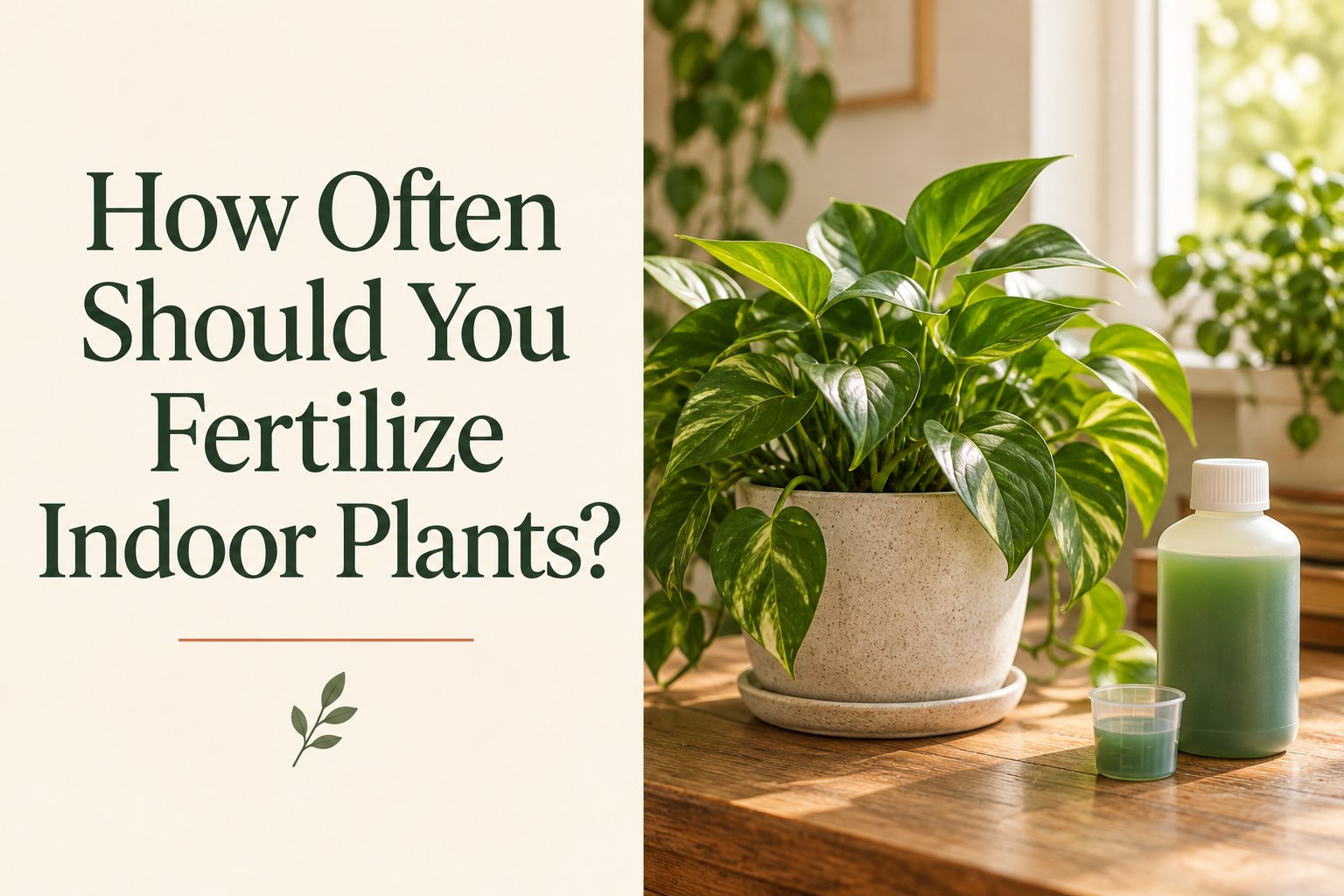
Knowing how often to fertilize indoor plants depends on several factors, including the type of plant, the time of year, and its current growth stage. Check whether the potting mix already contains fertilizer, consider whether the plant is actively growing, and follow the product label rather than a single feeding interval. Understanding these variables helps you provide the right nutrients without overfertilizing, supporting steady growth and overall plant health. This article offers practical advice to help you determine the best fertilizing routine for your indoor greenery.
Table of Contents
- Fertilizing Basics for Indoor Plants
- Why Fertilize Indoor Plants?
- Common Types of Fertilizer for Indoor Plants
- How Often Should You Fertilize Indoor Plants?
- Factors Affecting Fertilizing Frequency
- Seasonal Fertilizing Schedule
- Tips for Fertilizing Indoor Plants
- Avoiding Overfertilization and Damage
- Integrating Fertilizing with Watering and Overall Care
- Frequently Asked Questions
- How can I tell if my indoor plants need fertilizer?
- Is it okay to fertilize indoor plants during winter?
- What is the risk of overfertilizing indoor plants?
Fertilizing Basics for Indoor Plants
Indoor plants depend on careful feeding to thrive away from their natural environment. Understanding the fundamentals of plant nourishment helps you support growth, flowering, and overall vigor without overwhelming your greenery. This section covers when houseplants may benefit from fertilizer and the common products available, setting the foundation to feed your plants properly.
Why Fertilize Indoor Plants?
Plants absorb nutrients from soil outdoors, but potting mixes inside can lack sufficient minerals and nutrients over time. Fertilizing replenishes essential elements like nitrogen, phosphorus, and potassium, which promote leaf development, root strength, and bloom production. If the available nutrient supply is inadequate, growth or flowering may suffer. Pale leaves and slow growth can also result from watering, light, root, or environmental problems, so they are not proof that fertilizer is needed. Check the potting mix’s existing fertilizer and the plant’s active growth before adding more.
Common Types of Fertilizer for Indoor Plants
Indoor plant fertilizers come in several forms, each with benefits depending on your preference and your plants’ needs. Liquid fertilizers are popular for their easy dilution and quick nutrient availability, suitable for regular feeding during the growing season. Some granular products are formulated for slow or controlled release, but not all are; read the label to understand release rate and application. There are balanced fertilizers (equal N-P-K ratios) and specialized ones formulated for flowering or foliage plants. You’ll also find organic options using natural ingredients. Choosing the right type comes down to how often you want to feed, the plant species, and your comfort with each form.
How Often Should You Fertilize Indoor Plants?
Knowing how often to feed your houseplants can be a bit tricky since the right frequency depends on several factors. Indoor plants have different nutrient needs compared to outdoor ones because they rely entirely on the potting soil and your care. Over-fertilizing can harm them, while not feeding enough may slow growth or cause dull foliage. To keep your plants thriving, it’s important to match fertilization timing to their type, growth stage, and environmental conditions. Watering habits also influence this, so consider checking soil moisture and drainage—if you’re not sure about watering routines, see How Often Should You Water Indoor Plants? A Beginner’s Guide for helpful tips.
Factors Affecting Fertilizing Frequency
Several things affect how often you should feed your plants. First, the species matters: fast-growing tropical or flowering plants may use nutrients more quickly during active growth, while slow-growing succulents or cacti often need less. Check the plant’s needs and the fertilizer label before choosing a feeding interval. Second, the potting soil influences nutrient availability. Soils rich in organic matter or pre-fertilized mixes may provide nutrients for longer periods, reducing how often you need to add fertilizer. Third, light and temperature conditions affect plant metabolism and growth rate; suitable light and temperature may support faster growth, while low light often limits it. Lastly, actual growth matters more than the calendar. A resting plant may need no supplemental fertilizer, whereas a plant actively growing in winter under suitable conditions may still benefit from label-guided feeding.
Seasonal Fertilizing Schedule
Seasonal changes in light and temperature can alter growth, but indoor plants do not all follow the same feeding rhythm. During active growth, choose a fertilizer appropriate for the plant and follow its label conservatively; no interval or dilution suits every houseplant. Reduce or pause feeding when growth slows or stops, rather than automatically stopping in winter. Winter-growing plants or those under suitable supplemental light may still have nutrient needs. Yellowing and slow growth can have several causes; review light, watering, root condition, and the mix before treating them as a nutrient problem. Adjust feeding schedules as necessary and always follow label directions for your plant’s specific needs.
Tips for Fertilizing Indoor Plants
Balancing plant nutrition is key to keeping your indoor greenery flourishing without stress. By understanding how to fertilize properly, you can help your plants grow strong without the risk of harm. Consider these tips to make feeding your indoor plants both effective and safe.
Avoiding Overfertilization and Damage
Too much fertilizer can be just as harmful as too little. Overfertilizing often leads to salt buildup in the soil, which can burn roots and stunt growth. To avoid this, always follow the recommended dosage on your fertilizer package and resist the temptation to increase amounts for faster results. It’s better to apply less often and monitor your plants’ responses than to risk nutrient overload. Yellowing or crispy edges alone do not confirm fertilizer damage. Pause further feeding while checking recent applications, root condition, and watering. If excess salts are suspected, follow product guidance; rinsing a suitable, freely draining mix may help, but do not automatically saturate a wet pot or damaged roots. Use a product suited to the plant at its labeled dilution.
Integrating Fertilizing with Watering and Overall Care
Fertilizing works best when coordinated with regular watering and general plant maintenance. Follow the product’s instructions for application and dilution. Some products should not be applied to very dry mix, but that does not mean every plant needs extra water before feeding. Check current moisture needs and active growth, rather than assuming a spring-and-summer feeding calendar. Combine fertilizing with routine practices like pruning, pest checking, and providing sufficient light to maximize benefits. For beginners, referring to an Indoor Plant Care Guide for Beginners: Everything You Need to Know can offer additional insights into harmonizing feeding with other care aspects.
Frequently Asked Questions
How can I tell if my indoor plants need fertilizer?
Slow growth, pale or yellowing leaves, and reduced vigor may be associated with nutrient problems, but they can also have other causes. Check light, watering, roots, active growth, and any fertilizer already in the mix before deciding to feed.
Is it okay to fertilize indoor plants during winter?
It depends on actual growth and conditions. If the plant is resting or light is too low for active growth, reduce or pause feeding. If it is actively growing, follow species needs and product-label guidance, accounting for fertilizer already in the mix.
What is the risk of overfertilizing indoor plants?
Overfertilizing can cause salt buildup in soil, burning plant roots, wilting, leaf drop, or stunted growth. Follow the product label and avoid adding fertilizer the plant does not need. Do not flush every pot on a fixed routine; assess suspected salt buildup and drainage before choosing a response.